Kategorie: Uncategorized

  • 24.05.2025

    Spring Update

    Have you been wondering when there’ll finally be a new blog post? Or what happened to those promised photos from the Femundløpet? … Yeah, I’ve been wondering too — or rather, not exactly. I actually know why I still owe you all of that.

    We’ve been struggling with our website for months. Despite upgrading our storage space, we haven’t been able to upload new photos or create new pages. So, for now, we’ve had to settle for updating the existing pages — mostly dates and schedules — while working hard behind the scenes on a brand-new website. It’ll be hosted on a different server and will hopefully run much more smoothly.

    Still, I wanted to give you a little update — even without photos — just so you don’t think we’ve fallen into hibernation 🙈

    First of all, our family has grown a bit. At the end of the season, Kenai from Coldnosehuskies joined us. He’s a year and a half old and incredibly affectionate. I had planned to take him straight to the mountains for a trial run, but that didn’t go as planned. After 25 km in a snowstorm, my sled broke — and in such an inconvenient spot that only a makeshift fix was possible. Wrapping it with a tension strap barely counts as a repair 😅. Continuing over icy trails for several more days would’ve risked serious damage to the sled, so we made the tough decision to turn back. Somehow, my mountain trips always seem a bit cursed. At least Raffi got to enjoy a great final tour the week before. Our second new addition came completely unexpectedly. A colleague from the vet clinic shared a photo of a hunting dog puppy (a mix of Laika and Norrbottenspets) in our work chat, saying he urgently needed a new home. Raffi wasn’t home, so I forwarded him the picture — and it took him all of two seconds to reply. I followed up with a call to my colleague to find out more. At the time, the puppy was four months and one week old and had already been through three homes after leaving the breeder. None of them could provide the proper care or activity his breed needs. Can you imagine that? A little, innocent pup being passed around like that so early in life? It was clear to us that he finally deserved a real home. The very next day, he moved in with us. We named him Enzo — it’s easier to call out than his original name. Despite everything, Enzo has been incredibly sweet from the start. But he also showed behaviors clearly shaped by the insecurity and instability he’d experienced. He’s now been with us for two and a half weeks — and he’s truly settled in. He knows he’s found his home and that he can rely on his people — on us. He’s grown a lot physically, hit a big developmental leap, and is currently going through teething. We also started scent training with him right away — tracking moose, which isn’t hard when they regularly pass by. And he’s doing great. He gets along well with the other dogs, and conveniently, Laikas can also run in front of the sled. So Enzo will not only join us on hunts, but also come along on some sledding adventures 🥰

    What else is new? A whole bunch of building projects… Should I give you the scoop already? Well, since I can’t post teaser pictures for you to guess, here’s a quick rundown: We’re expanding the kennel a bit. Two more dog runs are being added so we have enough space, especially as the number of senior dogs naturally increases. We’re also installing a training wheel, which allows us to train the dogs even when the trails are too muddy or icy to use the quad or training cart safely without damaging the terrain. And we haven’t forgotten about our guests! We’re setting up two camper van spaces so you’ll have the option to stay right next to the kennel during the summer — a great alternative to the guesthouse. Plus, we’re adding a wellness area with a sauna and hot tub, right beside the dogs. Honestly, it doesn’t get much better than that 😃

    Feeling like it’s time for a visit? Get in touch! Our winter tours for the 2025/2026 season are now online, and there’s plenty to experience in summer and autumn too. For a taste of winter, check out our Instagram or Facebook. We recently posted a video filmed by our friend Markus (Markus Casutt Photography) at the end of January and early February. He’s now busy editing — alongside a short promo video, there’ll also be a longer documentary about our life with sled dogs. Huge thanks to Markus for the amazing footage!

  • 26.02.2025

    Femundløpet 2025

    Two weeks have already passed since the start, but as always, there was too much to do to write a report right away. But patience pays off, because now it’s finally finished. You’ll just have to wait a little longer for the pictures, as I’m still fighting with the upload.

    How it all began

    I guess I have to go back a long way, but only about ten years 😂 You already know that, since I started working with sled dogs „professionally,“ I have mostly, if not always, trained race dogs for long-distance races. Even when we started our own little kennel, the training was structured from the beginning as if we were going to race, even though it would still take some time before the races would begin. And when you train for long-distance races, you can’t avoid the Femundløpet. It might not be the longest race in Europe, but it’s the biggest in terms of participants. Not that I care much about that. No, but the area where it takes place and the atmosphere around it are just incredible. You have to experience it for yourself.

    So, after we got back into the racing business with our own dogs last season, the Femundløpet was at the top of our wish list. We started planning over a year ago, thinking about the guest tours, handlers, etc. But I won’t tell you that I also started drafting a preliminary race plan – that is, run and rest times – a year ago 🤫 Of course, all of these plans were tossed around multiple times due to date changes, the cancellation of my originally planned handlers, suddenly valid vaccination regulations, and not to forget the disastrous training conditions this winter. I had always said that I wouldn’t start if I wasn’t sure the dogs could handle the 450km. So, I was unsure for a long time whether I should even go to Røros. I had almost decided against it, but after conversations with experienced mushers, veterinarians, and Raffi, we decided to just treat it as training for the dogs. Because even if we didn’t complete the full distance, they could still learn a lot. The long trip to Røros, the start in the middle of the historic old town with what seemed like millions of spectators, the checkpoints with countless other teams, new trails, and changing trail conditions… just to name a few.

    Alright, we’re going 😊

    The Team

    • Barolo – 8 years old, my main lead dog. I knew that for him, especially due to his size and weight, the expected trail conditions could make it difficult to finish the race. But I wouldn’t have started without him. He’s my rock, the one I can always rely on.
    • Max – 2 years old, lead dog in training. Max is currently learning what it means to be a good lead dog. Sometimes he’s a little stubborn, and his appetite could clearly be better, but he was meant to prove himself in the race.
    • Timon – 4 years old, a „get up and go“ kind of dog. Timon belongs to the „Rangers,“ and just like his father, he never seems to get tired. No matter how far he runs, he stands there wagging his tail, waiting – impatiently – for the next leg.
    • Mavas – 3 years old, my hope. Mavas is very sensitive, which often affects her appetite and her will to run in lead. But she showed last year in the Metsjövidda Fjällrace that she can grow during a race.
    • Pumba – 4 years old, the „Happy-Dog.“ There’s really nothing more to say about Pumba, another „Ranger“, other than he’s probably the happiest dog alive. No matter what happens, he’s always happily bouncing around.
    • Stella – 4 years old, the powerhouse. Stella may not be particularly large, but she’s a real powerhouse. She pulls like crazy and eats like there’s no tomorrow.
    • Zazu – 4 years old, my favorite. He’s 1000% his father. Extremely strong in the team, especially in the wheel position, and knows exactly what I’m thinking and feeling. A race without him? Unthinkable.
    • Mose – 5 years old, full of power. Mose always goes „all in,“ maybe not the best strategy for long-distance races. That’s why we wanted to see how she develops over the distance.

    The Preparations

    I could go back even further here. Of course, the whole training was already tuned to the highlight of the winter… as far as the conditions allowed. Apart from that, you have to start early looking for accommodation in and around Røros because with nearly 200 participants in the Femundløpet alone, plus the other World Championship participants from sprint and mid-distance, it can get tricky to find a place to stay. But we were lucky, I found a very conveniently located Airbnb that had a large parking lot, giving us enough space for our trailer.

    In the last week before departure, it was mainly about cutting and packing the right amounts of food and preparing the equipment. The food part was easier said than done. I was so excited that my head was completely confused, I had to recalculate a hundred times how much of which snack to bring. Plus, we couldn’t prepare too early, as there were already warm temperatures in between, and small-cut snacks thaw much faster than, say, large meat blocks. But little by little, everything was cut – meat, fat from moose, reindeer, and chicken, fish, and not to forget, the magic weapon, heart ❤️ – and packed into different-colored bags so I wouldn’t have to search during the race but just grab the right color.

    For the equipment, we had to pack the right harnesses and coats with spares, as well as booties in the correct sizes and the necessary amounts. And of course, the mandatory equipment. But that was easy because we could just tick off the list. Speaking of the list: the entire packing list, including clothes and food for us, was only four pages long, with two columns per page 😉

    The Journey Begins

    Since we wanted to be on time for the opening ceremony on Sunday, February 9, in Røros, we planned to leave on February 8 with a stopover in Östersund to save the dogs (and the driver) from an excessively long journey in one day.

    So, we got up at 5 am, gave the dogs a soup so they had time to digest before the drive. Then quickly loaded all the food from the freezer. The equipment and dry food had already been handled the day before. Then, the most important part: the dogs 🐕 and off we went.

    The drive went smoothly, and by the afternoon, we were able to settle into our accommodation at a campsite in Östersund. The dogs first got something to eat since they were too excited to eat during the drive or stops. Afterward, each dog got a walk… Michelle, who was my handler for the race, quickly warmed up, too. It’s funny when you take two dogs at once. Mmh, sled dogs are pulling dogs… they proved it without a doubt 🤪 Then, Michelle and Yves went shopping and came back with pizza and ice cream. It doesn’t get much more typical than that 😉 but it was delicious. At least the ice cream. The pizza couldn’t compete with our homemade one at home. In the evening, more food and another walk, and the first travel day was done.

    The next morning began as usual, with breakfast and a walk for the dogs, breakfast for the musher and handler, and then we could continue. At the border, we stopped to show the deworming proof of the dogs. However, it was Sunday… and the customs office was closed. Great! Well, onward to Røros for the last few kilometers. Timing was such that we could do the registration right before heading to our accommodation. Again, the same routine: dogs out, feed them, walk.

    In the early evening, Michelle and I went back to Røros for the opening ceremony. Due to the size of the event, it wasn’t held in the church but in a sports hall, which unfortunately took away some of its atmosphere.

    Waiting for the Start

    We had two free days before things got serious. On Monday, I wanted to take the dogs for a little run to stretch out after the long travel. I received the information that the trail from the checkpoint in Tolga towards Tynset was quite poor, so I decided to start nearby and drive a bit towards Tolga. It couldn’t get worse, right? In fact, the trail was very hard and icy since there was almost no snow. There were also some stones to watch out for. But it was definitely manageable, and we enjoyed the training.

    On Tuesday, I sent my handlers to the start of the 650km race. Neither of them had ever been to a race, and I thought it wouldn’t hurt for them to get an impression of how everything works before they kept bombarding me with questions. Meanwhile, I had time to take care of my dogs.

    Wednesday was the day of the days. The start was scheduled for 11:00, and since I had start number 166, my start time was 12:05. However, everyone had to be at a designated meeting point by 8:00. There, all the cars were sorted, which took about an hour, and then we were driven in a convoy to the start area in the old town. We let the dogs out again, and then I packed the sled. Although I had to unpack half of it when the sled was checked for mandatory equipment ✅ Then, I changed clothes and started to harness the dogs. In addition to the harnesses, everyone got booties, and Max and Mavas received coats. And then it was time to put them on the line…

    The Start

    Once all the dogs were harnessed, the sled was hitched to an atv, which then slowly drove towards the start. The road had very little snow, and without the support of the atv, it would have been absolutely impossible to get to the start without damaging anything. At the start, the snow anchor was attached to a tire, and while the seconds counted down until the start, someone held a microphone in my face and asked odd questions… I only understood about half of them. Though, that might have been because I was thinking about something other than an interview 🤭

    And just like that, it was 12:05:00. Off we go. The dogs were highly motivated and ran up Kjerkgata, despite the brakes. And then came the turn I had feared for years. I don’t know if it was particularly well-prepared this time or if it was because I only had eight dogs… But I survived it without falling in front of hundreds of people and even more on the livestream screen ☺️

    Actually, it gets tricky after the turn, as it’s quite fast and still somewhat curvy downhill out of the town. Shortly after passing the stadium, where the finish line would also be, my dogs wanted to go wrong briefly at a barrier. First, the anchor wouldn’t hold on the icy trail, and then it held so tight that it took me a few seconds to get it off. But now we were on our way.

    Stage 1: Røros – Tufsingdalen

    The first stage had to be completely rerouted due to a lack of snow. Instead of going over the mountains, we went through the valley. Nevertheless, it still had its ups and downs, and especially the latter were challenging, as they were very steep and, with nearly 100 teams already ahead of me (the 650km teams also used this trail), deep brake grooves had formed, making it difficult to brake and control the sled.

    Even on the new route, the snow was limited, which led to a rather adventurous first snack break. First, my dogs got tangled up when I stopped because they all wanted to reach the best and deepest snow on the side. Once I finally untangled them and had the first snack in hand, a team came from behind, and as it passed, my anchors came loose. I had the option of trying to secure them either on the icy trail or in the loose snow at the edge. Neither worked really well, and I had to be fast to keep the dogs and the sled under control without getting the anchors in my legs… So, we decided to postpone the snack break by two or three kilometers to first calm down a bit. The rest of the shortened 45km stage went smoothly, and after a little over three hours, we reached the first checkpoint.

    In Tufsingdalen, we stayed for about an hour to snack and lower the pulse. With the weather at its best, we then set off for Drevsjø.

    Stage 2: Tufsingdalen – Drevsjø

    The next stage was supposed to be 64km. At first, there were some more ups and downs, although I honestly can’t remember the details 🙈 But what I remember very clearly is the magical atmosphere when the full moon peeked out from behind the clouds. It was only there for a short while before the clouds took over, but those few minutes were simply breathtaking. Moments like these are why you endure all the hardships. Just me and my dogs, surrounded only by the indescribable beauty of nature.

    Later, the trail went for several kilometers over a lake, which felt like an eternity. After that, there were another 20km, where you go in and out of the checkpoint, so you could also encounter oncoming teams, which my dogs handled with great skill and even drew new motivation from. We arrived in Drevsjø shortly before 9 PM, where I planned to take the mandatory rest break, so six hours plus 25 minutes for time adjustment.

    Checkpoint Routine: First, you hook the dogs with the second snow anchor. On the way back, they get their first snacks, and I take out the tuglines, which is the signal for the break. At the same time, I remove the booties. Then I put the coats on them and distribute straw to make them comfortable. Now, I fetch the checkpoint bag and water to cook food for the dogs. While waiting for the water, I check the dogs, massage their joints, and work out any tight muscles. Then, it’s time for food. While the dogs eat, I pack the new snacks for the next stage in the sled so everything is ready. I place the additional snacks for later during the break and the next set of booties right next to the sled. Then, I quickly check that all the dogs are fine, and then head to the car… which was parked quite far away. Yves had already prepared food. Of course, I wasn’t really in the mood to eat, so I could only manage a few spoonfuls. Then I quickly crawled into the sleeping bag to get some rest. At least the timing was right. After three hours, Michelle was supposed to wake me, but my internal clock was quicker 😉 So, I quickly got dressed, went to the dogs, gave them snacks, massaged them, and warmed them up for the next stage. Just before the start, I put on their booties, and off we go…

    Stage 3: Drevsjø – Søvollen

    The next stage started with the same familiar end of the previous one. Relatively early on, I overtook another team… and from that point on, I was mostly alone for the rest of the stage. I was able to see the lights of the team once more when I took a snack break, but then I was on my own again. Most of the time, the trail followed some forestry roads, or at least that’s what I assume. It was relatively boring, though maybe that was because it was still dark, and I couldn’t see anything of the surroundings.

    After about 50km, the ascent to the mountains finally began, which Raffi had told me to enjoy the view of. Hmm, well, first it was still dark, and when it got brighter, it was snowing, and the sky was very overcast. So, there wasn’t much of a view to be seen 😔

    Just before the end of the stage, Barolo started to get a bit tired and stiff, so Max took over the role of motivating the team. Happily, we reached the checkpoint Søvollen shortly after 8:30 AM. Here, we followed the same routines as in Drevsjø, with special attention given to Barolo, who was showing some pain in his left shoulder and, due to compensating, also in his right carpal joint. He received extra care in the form of massages, warmth, and a check from the race vets. Meanwhile, I was thinking about whether and how the race could continue without Barolo. We had always known it was possible that Barolo wouldn’t be able to finish the whole race, but it’s still really hard to take out your main lead dog and continue…

    When I was done with the dog care I went back to the car. My handlers had brought me waffles, which I quickly ate before I wanted to lie down again. And here came probably the funniest situation of the entire race. I had sat down on my sleeping bag with my feet outside and asked Michelle if she could pull off my shoes. However, the sleeping bag was quite slippery on the mat, and everything was sloping towards the door, which led to Michelle almost pulling me out of the car. I tried to hold on to something while we both nearly died laughing.

    Okay, now I had to quickly sleep for two hours… Not happening, though. At that time of the day, you just can’t sleep, especially when you check your phone to see how the 650ers are doing and what the rest of the 450ers are up to 🙈 I did put the phone away, but sleep was still out of the question. So, I got dressed a little earlier to spend more time with Barolo, even though I already knew I would take him out. When I unhooked him to walk and warm him up, the rest of the team suddenly became fully awake and desperately wanted to continue. But first, of course, they got a snack. Then, I had one of the race vets check Barolo. After he had a bit of rest, it turned out that the pain on the left side wasn’t coming from the shoulder but from the elbow. For me, this was the clear confirmation that he would now take a break in the handler’s car. Meanwhile, the others were eager to move on. But I decided to give them a bit more rest, so I took my time with the warming up, putting on booties, and so on. We set off for the next stage just before 1 PM.

    Stage 4: Søvollen – Tynset

    Originally, I thought about letting Mose run with Max in lead. But it quickly became clear in the first kilometer that Mose was a bit overwhelmed by the racing situation. Since Max had done really well in single-lead during a more demanding training session, I decided to try it this time too.

    For the first half of the stage, we were basically alone, so there was no question about how well the single-lead would work when being overtaken or overtaking, which is still somewhat new to our dogs. It’s a very different situation when you train with another team from the kennel, where everyone knows each other, compared to encountering unknown teams.

    The stage began with some uphill sections, before we descended quite steeply. Later, though, the ascents clearly predominated, some not so steep but long, others much steeper. Apart from the cleared roads, on which we were sometimes traveling, the trail was mostly deeply trenched, which made it relatively difficult for the dogs to run. It was pretty warm, and the runners seemed to be sticking to the snow. So, I only made slow progress, though Raffi, tracking the GPS, told me that it was probably similar for most teams on that stage.

    In the meantime, Mavas probably strained something and showed pain in the shoulder (which later turned out to be the biceps). Given the trail conditions and the less-than-ideal training conditions this winter, I decided already on the way to end the race in Tynset. I didn’t want to risk any further or more serious injuries, and I wanted the dogs to finish the race happy.

    I’m not sure about the exact kilometers, but the last climb was a real challenge. It felt like it went on forever, with several steep sections. But my dogs were just amazing, handling it brilliantly. Afterward, though, we had some „discussions“ because the „Rangers“ again didn’t want to run in front or behind each other. In the end, I just put them side by side. Also, I had initially planned to put Mavas in the sled to spare her shoulder during the last downhill stretch, but she – to put it mildly – thought that was an extremely stupid idea. So, on the last five kilometers, we must have stopped 50 times to sort the lines and adjust the dogs 🙈

    But after six hours for 56km, we finally reached Tynset. The whole team went for the snacks I offered, and some even drank clear water, which they had previously refused. Since I planned to stop, all the dogs were checked by the vets. They confirmed that all of them were in excellent condition, well-hydrated, and with a good body score. According to the vets, Mavas could have continued after a break, but I had already decided to stop, and that decision was made.

    By the time we arrived at our accommodation, it was about 10:30 PM. Now, it was time to take care of the dogs again, and already here it became clear that the vets were right – Mavas showed no signs of pain anymore. Barolo was happy as well. The rest of the team was doing well, too. The next morning, they all would have preferred to continue, which confirmed to me that I had made the right decision. Of course, one could argue that the dogs could have continued the race. Yes, they might have. But by stopping in Tynset, they gathered many positive experiences: the checkpoint routines, sleeping next to many other dogs amid all the hustle and bustle, encountering other teams on the trail, knowing they get a break before they are exhausted, eating under stress, etc. All of this is foundational for future training. And it wouldn’t have been worth it to spoil these positive experiences with negative ones like injuries and overexertion, just because I wanted to see the finish line. The dogs didn’t know where that finish line was. They only knew they had fun and ran a great new trail.

    Thank You for Everything

    In conclusion, I want to say thank you.

    Thank you to my wonderful dogs, who are the real superstars of this adventure.

    Thank you to Raffi for all the support on our long journey to Femund. Whether it was training the dogs, countless massage and stretching sessions, or the encouragement to start, no matter what came.

    Thank you to my handlers, Michelle and Yves, for their help during the race.

    Thank you to everyone who contributed to making this dream come true.
  • 24.12.2024

    What a winter 🙄

    As good as the summer was for „autumn training,“ the winter has been terrible for weeks, or rather, months. At the beginning of October, we had a brief spell of snow for two or three days, but since then, it’s mostly been too warm. Or it rained. Or it was at least cold enough that the rain froze. A real disaster for training.

    We had to take countless unexpected breaks because our training paths were so slippery that it would have been too dangerous for the dogs. When we were able to train, they still ended up damaging their paws, even with booties, because the trails were so rough. I’ve been training huskies for ten years now, most of that time for racing, but I’ve never experienced such a high bootie wear-and-tear in autumn. Which, of course, is a lot of wasted material and money, but the bigger issue was that we felt like we had to change the booties every five minutes 😬

    And as if we weren’t already behind schedule with our training, the Femundløpet organizers came up with their next brilliant move. Although it had been decided in the fall, at the time of registration, that Norwegian, Swedish, and British dogs would not need a rabies vaccination, on the evening of November 30th, we suddenly received the opposite message. For fairness, it should be mentioned that it’s not actually the Femundløpet organization demanding the vaccination, but the IFSS, the International Federation of Sleddog Sports, as the Femundløpet is also the World Championship. However, in previous World Championships held in Norway and Sweden, the IFSS had always made exceptions since the national regulations neither require nor recommend rabies vaccinations, because fortunately, rabies doesn’t exist here. To be precise, it’s even questionable whether veterinarians who vaccinate dogs that don’t travel outside of Norway and Sweden, without a medical need to do so, are violating ethical professional standards. But even if we were to accept that, vaccinating during the peak of training is absolutely the wrong time. You can imagine how thrilled most mushers were about that. So, I spent the whole Sunday wondering whether I should scrap the Femund plans or go ahead and vaccinate in December. I had almost decided on the former when the weather forecast made me change my mind. Again, warm weather, rain, and icy conditions were predicted, meaning very poor training conditions, if training would even be possible at all. So, somewhat reluctantly, I decided to have the A-team vaccinated on Monday morning. Another training break.

    How much this will affect our plans remains to be seen. We’ve kept the option open to go to the Femund. But if we determine beforehand that we’ve had too many training setbacks, we may have to drop those plans after all.

    For the past week, we’ve finally been able to go sledding, not on all the trails yet, but at least it feels more like winter again 😉

    And so, we send you Christmas greetings from snowy Lapland and wish you a fantastic start to the New Year 🎅🏻🎄🥳

  • 30.09.2024

    8 Days Dogs, Cold & Northern Lights

    This time, it won’t be a report about a specific tour, but rather a description of what this tour usually looks like, although in reality, every tour is a bit different. This can be due to adverse weather, the wishes of our guests, or other unforeseen events. In any case, I think all guests have enjoyed the tour so far, even if deep snow or wind has tested their limits along the way.

    The stay always begins with a shared dinner, where not only do we get to know the guests, but they also get to know each other. This provides an opportunity to satisfy initial curiosity about our life with the dogs through questions and answers, and particularly to discuss what clothing would be good for the next day based on the current weather conditions. This introduction allows us to get a first impression of the guests, which will be the basis for the composition and assignment of the dog teams.

    The next day, it gets serious. While one of us picks up the guests, the other prepares the dogs. The dogs wait at the stakeout in the correct order for the planned teams. The sleds are also ready. This has the advantage that each guest can initially focus on getting to know their four dogs, instead of being completely overwhelmed by a wildly running pack.

    But before we start, there’s, of course, an introduction. How does sledding work? What is the most important thing? What is the second most important thing and the secret recipe for better riding? If you want to score points on your next tour, I’ll already share the answers 😉 The most important thing: never, and I mean NEVER, let go of the sled! The second most important thing: brake!

    Next, we cover the commands, speed, distance, lines, etc. Most guests‘ heads are already spinning a bit here, but unfortunately, it doesn’t work without explanation. Yet, there’s no need to overthink it. As long as you follow our instructions— which we often repeat or elaborate on during the tour— sledding isn’t that difficult.

    Now finally, let’s talk about the dogs. Each one gets their harness put on. Attention is needed here as not every harness fits every dog. First of all, there are different sizes, which can be recognized by various color markings on the harnesses. Additionally, we have different models, as depending on the individual body shape, coat type, and running style, some dogs fare better with one type than another.

    Oh, and by the way, your dogs have names too 😂 We understand that it can be hard to remember them all at the beginning with so much information, but later in the afternoon, you should take the time to learn them since you will be a team for the next few days.

    So, the dogs are harnessed. Are you ready? Then put away your phone or camera, because the start requires full concentration and two free hands. Together, we’ll harness the dogs. We start with the last team and work our way forward. You will stay with your lead dogs until the guide team is ready, and you get the signal from Raffi or me to get on the sleds. And now, attention, we’re off! But remember to go one at a time and don’t forget to brake!

    In the first few hundred meters, you will probably be completely overwhelmed by the boundless power of the dogs. You might forget how to steer around the corners without a steering wheel and somehow feel like you’re always going too fast or too slow 😬 but just wait and try to implement the instructions. It doesn’t take long before you get a feel for the sled and the brake; you’ll understand how weight shifting works and that braking doesn’t necessarily make you slower, but improves your riding.

    After a few kilometers, you’ll also be able to take in the wonderful surroundings: the sparkling snow, the silence, the perfection of nature. Depending on the conditions, we usually cover around 20 km, plus or minus. At the beginning of winter, with deep snow and more difficult conditions, it might be a bit less, and at the end of winter, with faster trails, it might be a bit more. For most guests, this distance is perfect for the first day— long enough to get accustomed to sledding but not too long to be completely exhausted.

    Back at the kennel, you can cuddle your dogs before they are unharnessed and allowed back into their warm huts. Depending on how strenuous it was for the dogs, they will either receive soup or food right away or a bit later, while you also get a snack (no, not the same soup 😂) and we warm up in our grill cabin. Afterwards, we prepare the equipment for the next days. Either we load the sleds today or the next morning, often depending on the weather. After that, you’ll return to the guesthouse. Together, we prepare dinner, and you’ll have another opportunity to ask questions for the upcoming days and prepare your personal items.

    The next morning runs similarly to the first, with the difference that today you won’t be coming ‚home‘ again. Our tour leads us to our first overnight stop, either in a tent or in a wilderness cabin. Here, too, the dogs are taken care of first; they will sleep at a stakeout during the tour. If it’s very cold, they’ll wear coats; otherwise, they simply enjoy lying in the snow. 

    Next, it’s time to fetch water or melt snow. In some places, there are open springs or a lake where we can drill a hole; if not, we rely on snow. You’ll be surprised how many pots full of snow it takes to fill a thermos with water. And we’re not the only ones who need water; the dogs need it too. Those assigned to fetch water will have their hands full. But that doesn’t mean the rest of the group is idle. The fire needs to be lit and tended, meat chopped for the dogs‘ dinner, and food prepared for the group. Not to mention that the cabins usually have a dry toilet and a woodshed, for which a path needs to be shoveled first.

    Once the basics are taken care of, we’ll take time for the dogs again; we cuddle and massage them and check their paws for any injuries—this can also be done while taking off their harnesses. With a bit of luck, you might witness a beautiful sunset, or perhaps the Northern Lights will dance above us during our ‚work.‘ Depending on our schedule, the dogs will get fed either before or after dinner. After that, not much happens. Believe me, even the night owls among you will fall into bed, or rather onto the sleeping mat, early.

    The next morning, you have to get up early; the dogs need breakfast. While they digest, it’s our turn for breakfast, then we clean up and pack everything back onto the sleds. The start today basically goes the same way as the last two days, with the difference that there’s usually a second person at the kennel to help out and the chains stay there. On the tour, you’ll have to manage it alone and also collect the chains. But after two days of practice, you should be ready for this 😉.

    We continue through marshes and frozen lakes, past birch and coniferous forests. Our daily distances on these tours range from about 25 to 60 km, always depending on the conditions and the guests‘ wishes. If you’ve ’survived‘ the third night out, you can feel happy—or maybe a little sad? Because today, we head back to the kennel. After taking care of the dogs and giving them some last cuddles, you’ll probably be longing for a warm shower at the guesthouse.

    Now you can relax, as the next day is free. Some guests book an excursion to see reindeers or go for a snowmobile ride. Most, however, simply enjoy the tranquility, grabbing snowshoes at some point during the day to walk to the kennel and spend a little more time with the dogs, maybe even feeding them one last time. But even if departure is on the agenda for the next day, it doesn’t have to be a farewell forever… the dogs and we are certainly looking forward to the next tour with you. Perhaps even the advanced version in the mountains?

  • 17.09.2024

    Autumn is here 🍁🍃🍂

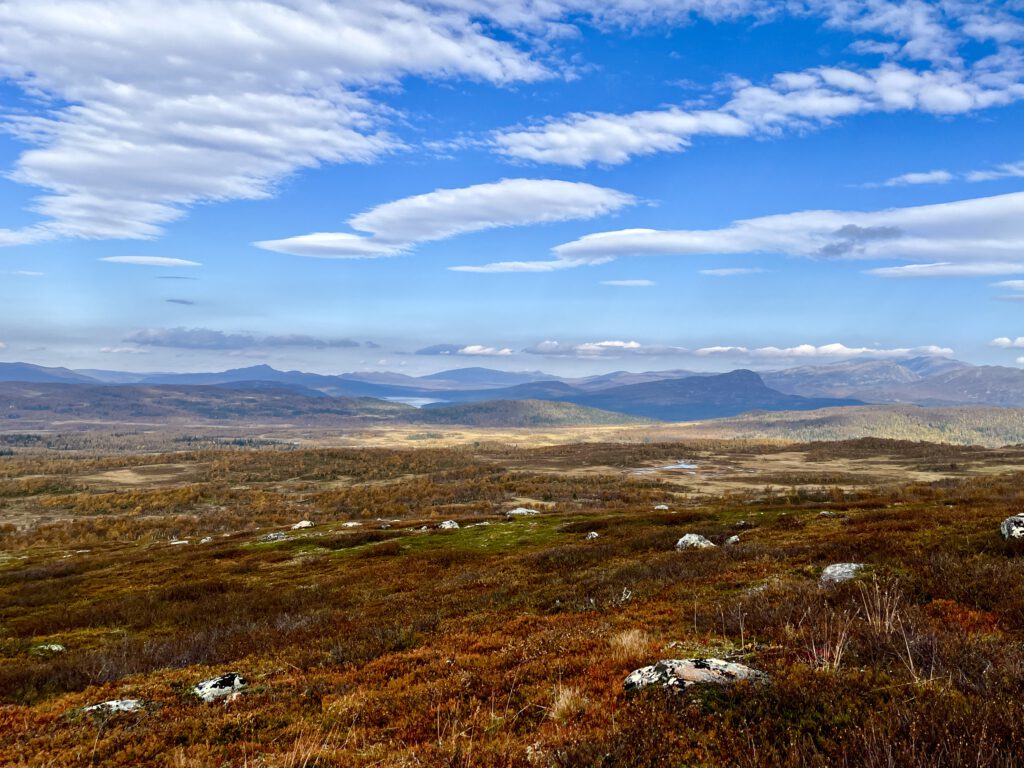
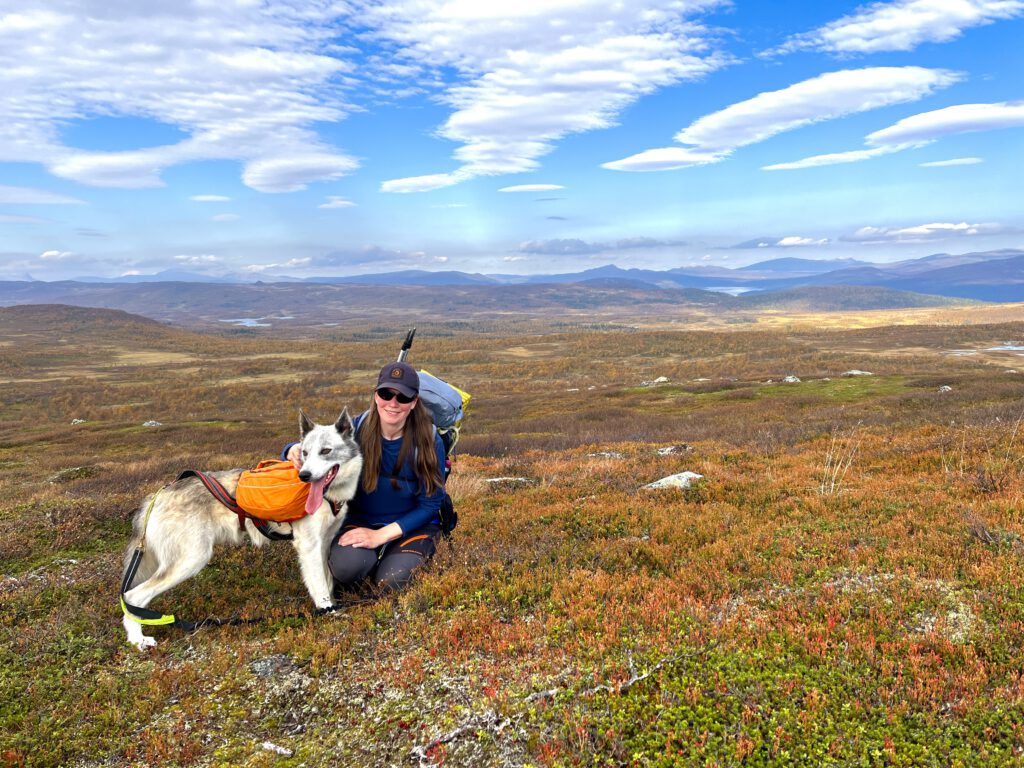
    This year, autumn arrived quite early. By the end of August, the leaves had already started to change color. So, it was the perfect time to go for a hike again 🥾

    Originally, I had planned the first week of September for the northernmost section of the Kungsleden trail, but just three or four days before, I got sick 🤧. Nothing serious, just a cold, but it was persistent. So, it was a sensible decision to postpone the Kungsleden hike. A week alone on a route with no mobile reception and initially rather poor weather forecast in a weakened state could easily lead to unpleasant situations. Of course, you’re almost never entirely alone on the Kungsleden, and I always carry a GPS emergency device with me, but there’s no need to take unnecessary risks. Instead, I considered taking a shorter trip of two or three days. And since I still had time, I came up with the idea of visiting our friends in Vilhelmina. It had been a few years since the last visit, and even though I had seen some of the dogs during a tour together, I was curious to see everyone again. As luck would have it, Simone had also planned to take a few days to go into the mountains with Yentna – a half-sister of Zazu. Perfect timing, I’d say 😉

    So, on Thursday of the first week of September, which had turned out to be quite warm, I drove to Vilhelmina. Zazu was, of course, with me, as he would accompany me on the hike. We spent the day socializing the dogs and, naturally, catching up. On Friday morning, we set off toward Saxnäs. The plan was a three-day hike covering about 49 km.

    The first day began with lots of undergrowth 😂. We started from the parking lot and immediately went off-trail. We were supposed to come across an old marked path shortly after, but it seemed really, really old, as there were no markings to be seen anywhere. Nor was there a path. So we battled through knee- to waist-high bushes or marshy areas that quickly soaked our feet. Well, mine, at least, since I had deliberately chosen not to wear Goretex and was hiking in trail runners. Sure, you get wet feet, but while walking, they warm up, and the shoes dry extremely fast. Okay, not when you’re constantly walking through water, but even Goretex shoes can’t handle that and don’t dry out afterward. 

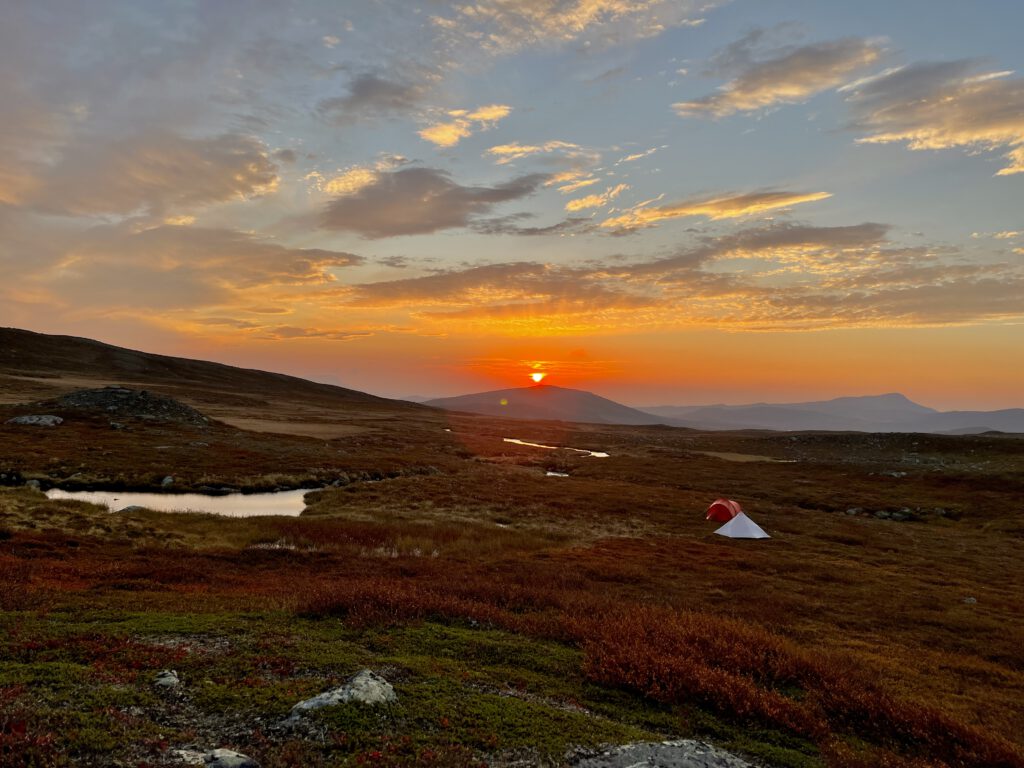
    So, we continued on our “path.” Occasionally, we spotted a marker, but they were so scarce that we had to constantly check the GPS to make sure we were still on the right track. Along the way, we came across lots of reindeer antlers and occasionally a reindeer too. But that was nothing compared to what was we will see the next day. Shortly before reaching our first stop, we decided to shorten the route and go straight „over the field“… which, to be honest, felt like what we had been doing all day anyway. We reached a river where we took a break and decided to camp there rather than walk the additional 1-2 km to the originally planned campsite.

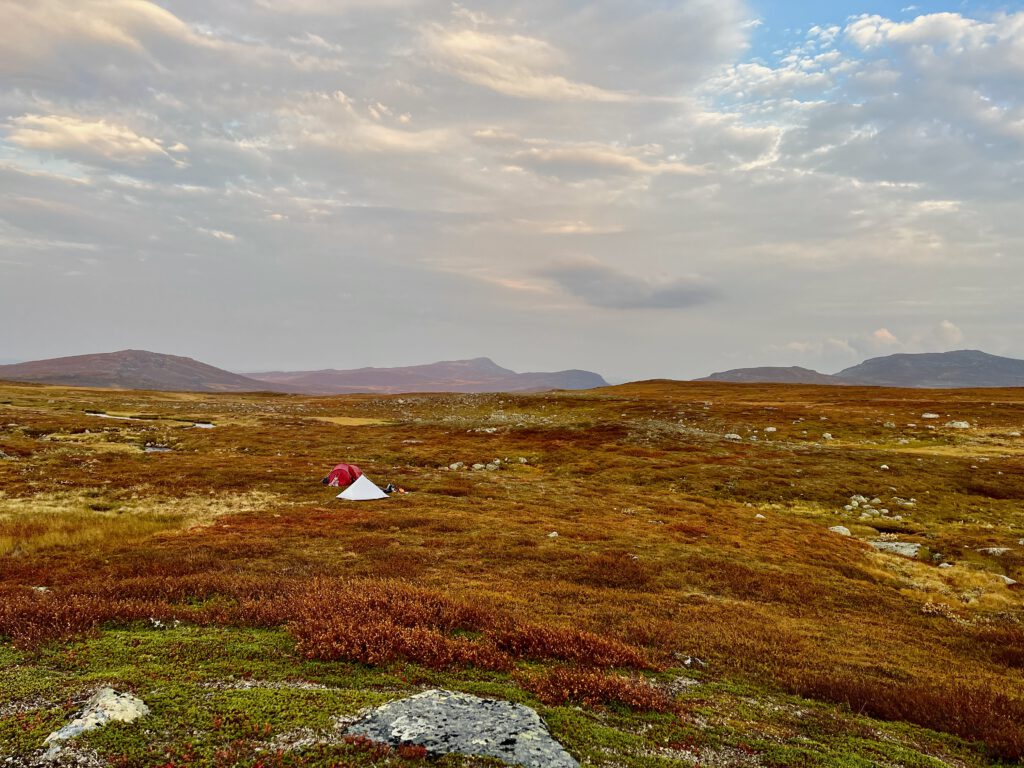
    We found a beautiful spot between two arms of the river, and just as we set down our backpacks, the sun came out and soon treated us to a stunning sunset. It had been quite warm all day, but luckily the sun had hidden behind some clouds for a while, making the hike much more comfortable. Though the day’s distance was only 14 km, it felt longer due to the lack of a trail and the trudging through bushes and swamps. So, after dinner, we quickly retreated to our tents ⛺️.

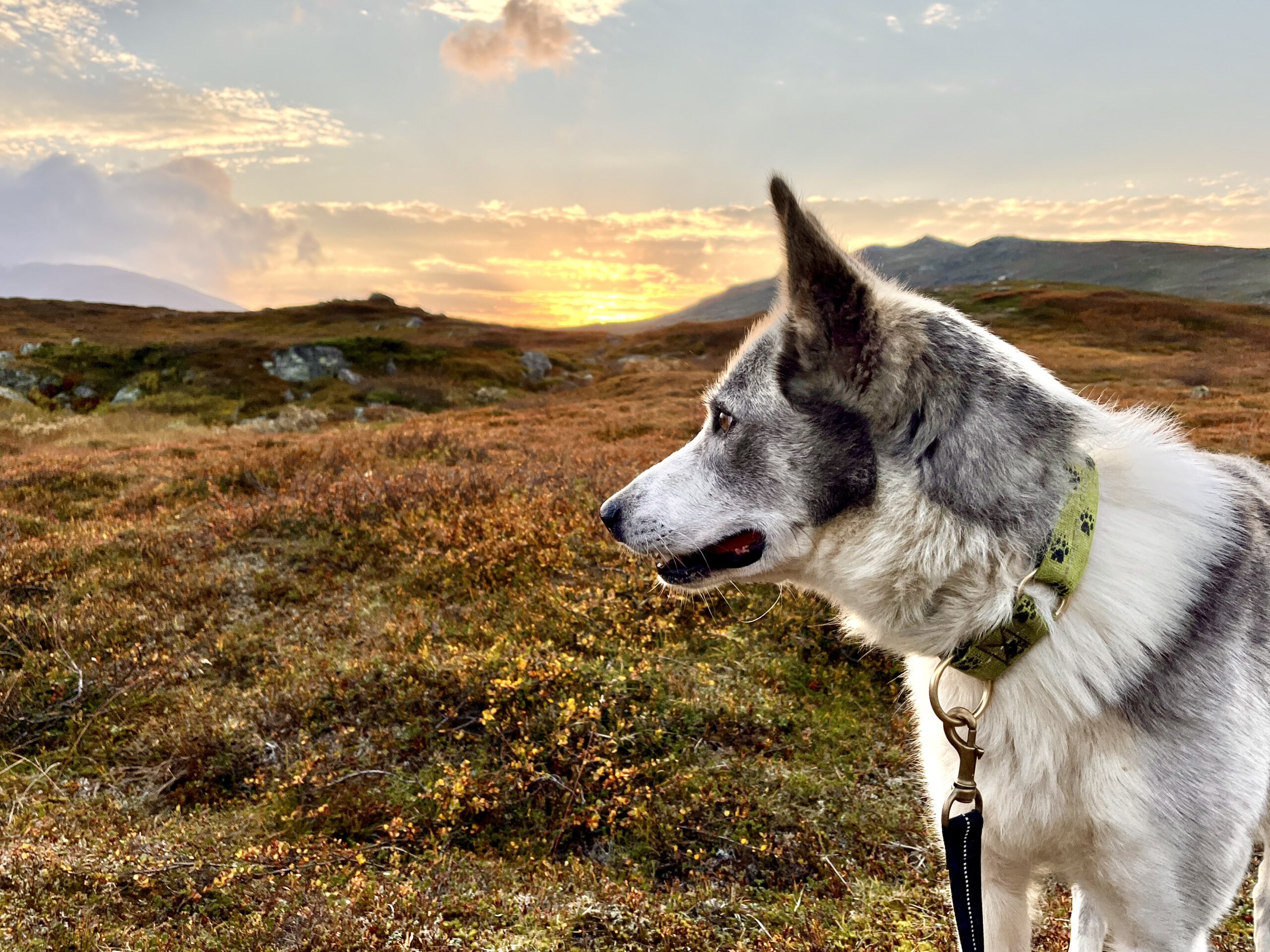
    The night was quite windy, so I ended up bringing Zazu’s bag into the tent’s vestibule. It was heavy enough not to blow away and was sheltered anyway, but better safe than sorry. Zazu, of course, slept in the tent with me, and the wind didn’t seem to bother him during the night. However, in the morning, he got scared a few times by the flapping tent walls. So, after we had already stepped outside to take some sunrise photos, I decided we might as well get up. Conveniently, the wind had dried the tent completely, so I could take it down and pack it right away. We waited until Simone and Yentna were up, and after breakfast, we headed out for the next stage.

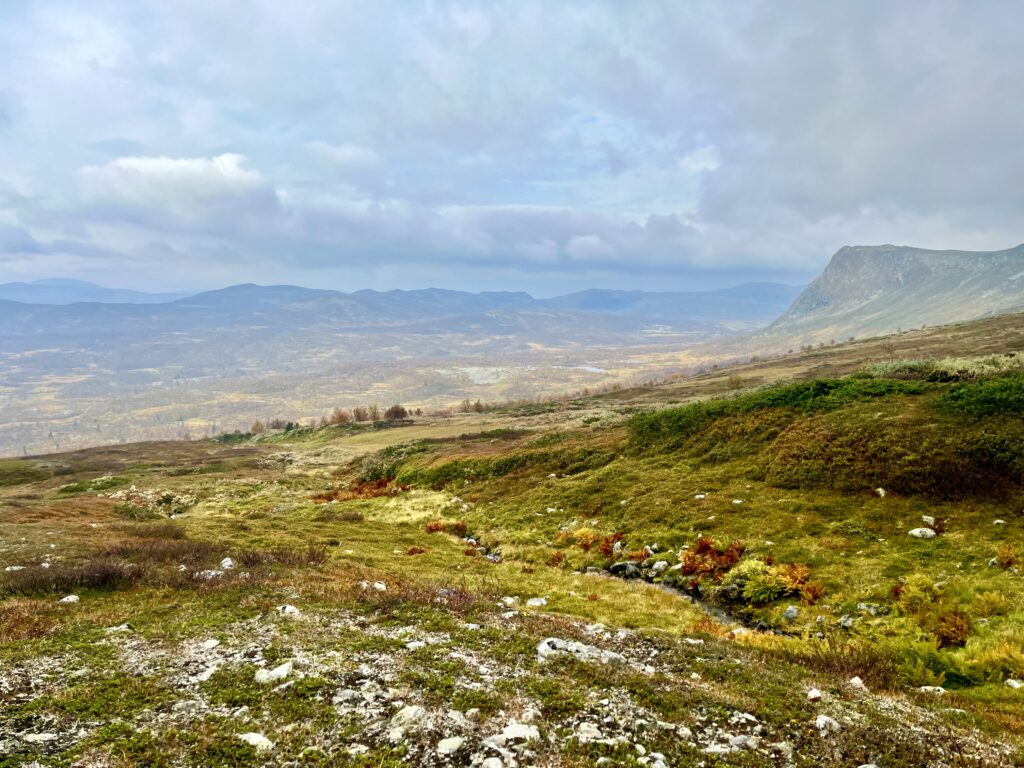
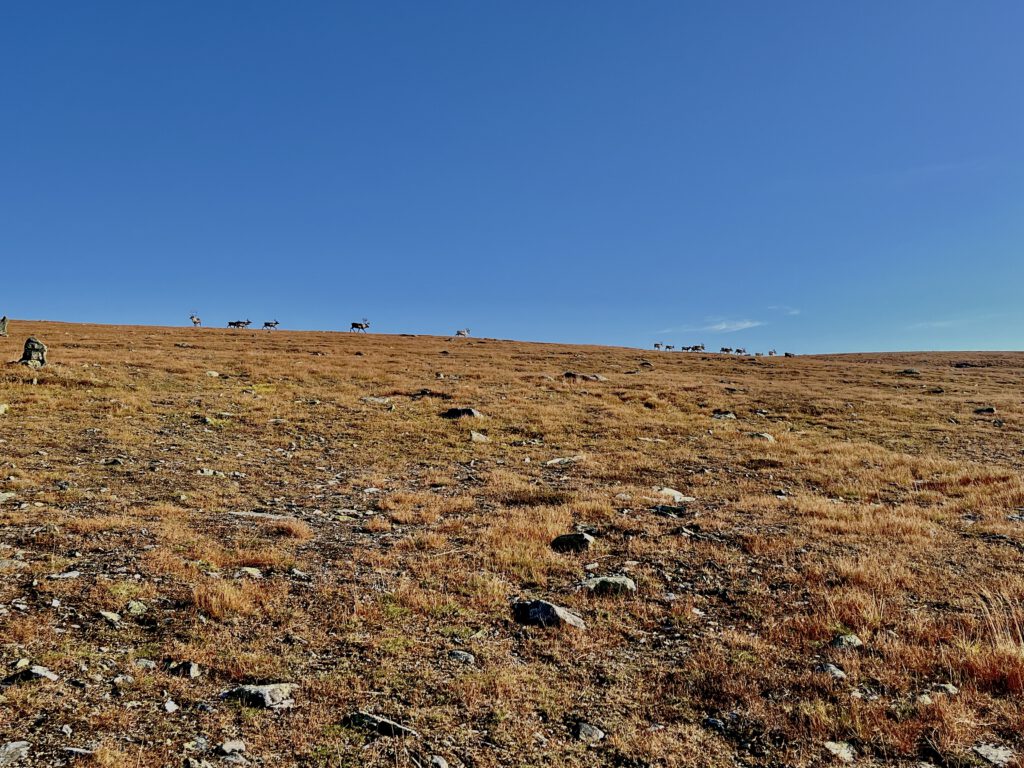
    Soon, we reached a slightly better-marked trail. There were still lots of little waterholes and another river to cross, but that was all manageable. Shortly after, we encountered quite a few reindeer, over a hundred in total across several groups. Yentna barely paid any attention to them, and even Zazu stayed fairly calm, though he kept staring at them with great interest. After crossing the mountains, we started to descend slowly. The view into a colorful valley was lovely, though due to the fog and clouds, the colors didn’t come out as vividly in the photos.

    And this is when I was reminded why I had sworn not to hike with Zazu anymore 🤣🙈. When a strong dog like Zazu pulls you downhill, you really have to watch your footing to avoid face-planting. So, we took it easy on the descent 😉.

    Just before turning onto the Lapplandsleden, Simone spotted some chanterelles and couldn’t resist picking them. Although we had packed mushrooms for dinner, fresh ones are always better 😋. Afterward, the trail was much better marked and led mostly through the forest, which provided nice shade from the now-shining sun ☀️.

    Not long before we planned to stop for the night, we came to a river that was missing a bridge for crossing. This sometimes happens with smaller streams or shallow water, but this river was fairly deep and fast-flowing. So, we walked upstream for quite a while but couldn’t find a suitable crossing point, so we went back and then walked downstream. It took a while, but eventually, we found a spot that was shallow enough for us to cross easily. The advantage of already wet trail runners is that you can just leave them on 😂.

    We walked a little further to the next river and set up camp after 21 km. As soon as we sat down in front of our tents, we had visitors. Two curious reindeer came by to check us out. After dinner, we quickly retired to the tents again.

    This time, the night was completely quiet, with only the sound of the river nearby. The next morning was extremely damp. It was so foggy that everything felt clammy, and the tent was pretty wet. Oh well, since it was the last night of our trip anyway, we just packed it up wet. Not that it would have dried in the next few hours.

    The day’s stage began with a climb that would have surely offered a fantastic view of the Borgafjäll valley behind us, had it not been so foggy that we couldn’t see anything at all. But as we climbed higher, the fog started to lift, at least in front of us. And suddenly, another group of reindeer appeared, majestically crossing our path.

    After the climb, we began descending again and approached a forested area, which was ablaze with beautiful autumn colors. After crossing the last major river – this time over a bridge 🤣 – we took a short break at a shelter. From there, it was only about 4 km to the parking lot. However, those kilometers included a fairly steep climb that we hadn’t expected from the map. But what the heck, if nothing else, it gave us something to complain about 😉.

    At the parking lot, we let the dogs cool off a bit before heading back to the kennel. The three days had passed far too quickly. But it was a great trip with perfect hiking weather and wonderful company.

    When I drove home the next day, the other dogs were eagerly awaiting me. But we had to wait two more days for the next training session since it was so warm that even at night, it exceeded our training limit temperatures.

    By last weekend, it had cooled down to near freezing… But what kind of autumn is this? It’s warm again, so we’ve had to move training to the night or early morning hours. And even then, it’s still quite warm. Let’s hope it cools down as the forecast promises for next week. 

  • 02.08.2024

    Hiking With Kids – An Extract From Our Brand New Newsletter

    Ta-da 🤗 yesterday evening it was the time, our first Lappland Nature Dreams newsletter was send. A colorful mix of news, information, tips and tricks and hopefully a lot of personality. You have missed to sign up? No problem, if you do it now, I can still send you the newsletter with all personal insights. In general, we will not publish the whole newsletter on our web page or on the blog because it should stand alone as what it is, an email newsletter. But we will publish some extracts that usually are also blog topics 😉

    So today: Hiking with children – on tour in the Vindelfjällen Nature Reserve

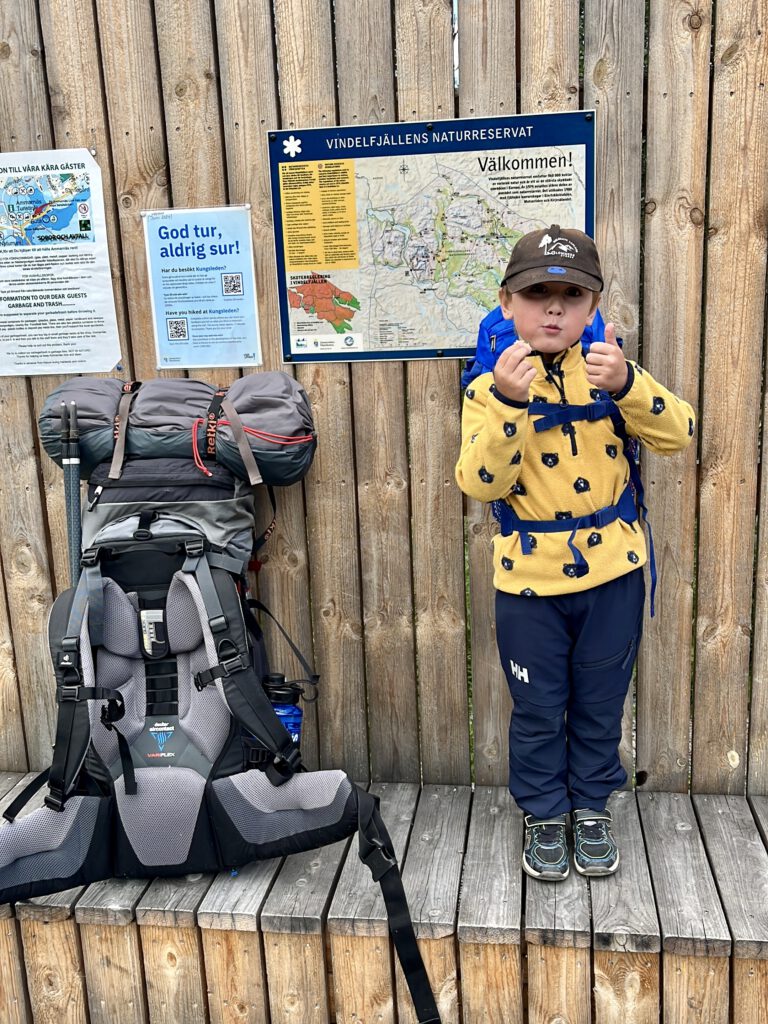
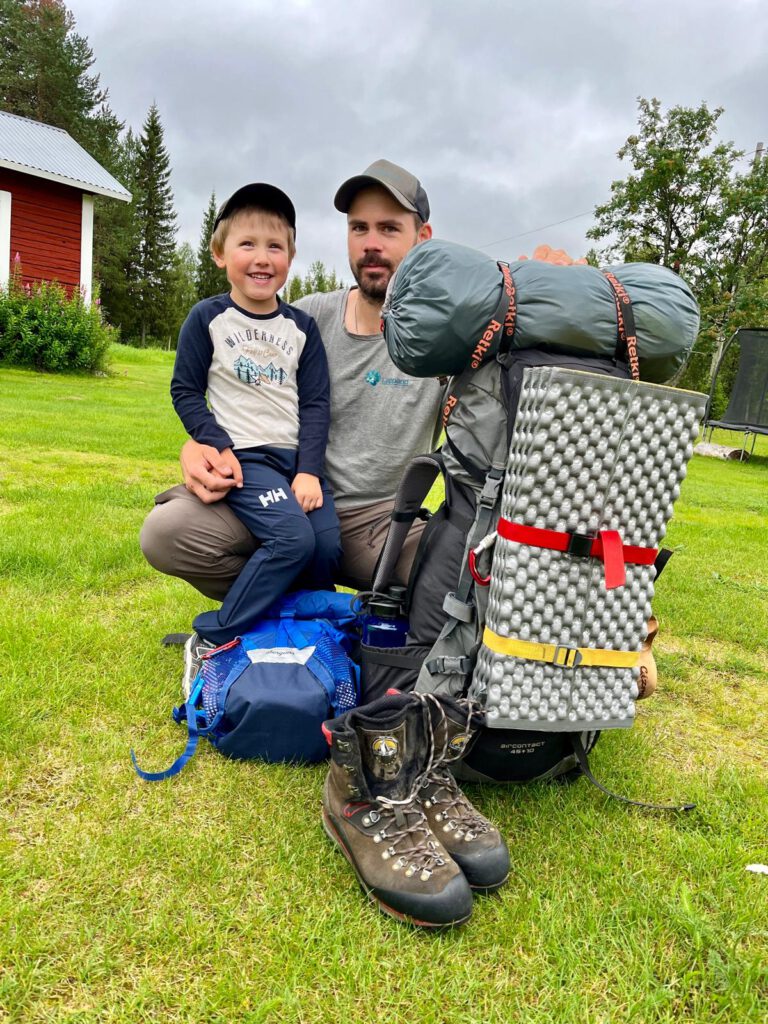
    Since long time Raffi had promised Joël that he would go to the mountains with him. We were looking for a tour that could be done in two to three days and that was suitable for a four-and-a-half-year-old child. So we chose Ammarnäs and the Vindelfjällen Nature Reserve, as this is already a fell region on the one hand, but on the other hand it is not so exposed and remote that it would be too extreme.

    First of all, we had to pack. The disadvantage of hiking with a child: as an adult you have to carry twice the equipment, because smaller children should carry a maximum of 5-10% of their own weight. So Joël had his sleeping mat in his backpack, toothbrush, cutlery, a stuffed husky, sandals and his rain jacket, and Raffi had to stow the rest. Well packed, they set off…

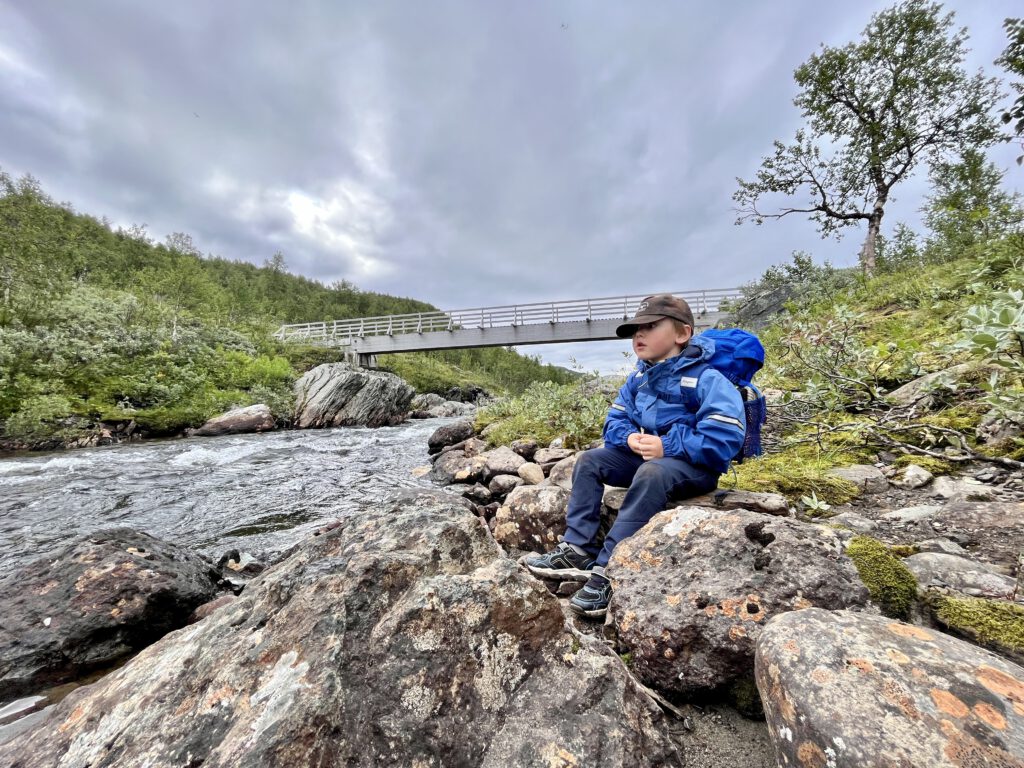
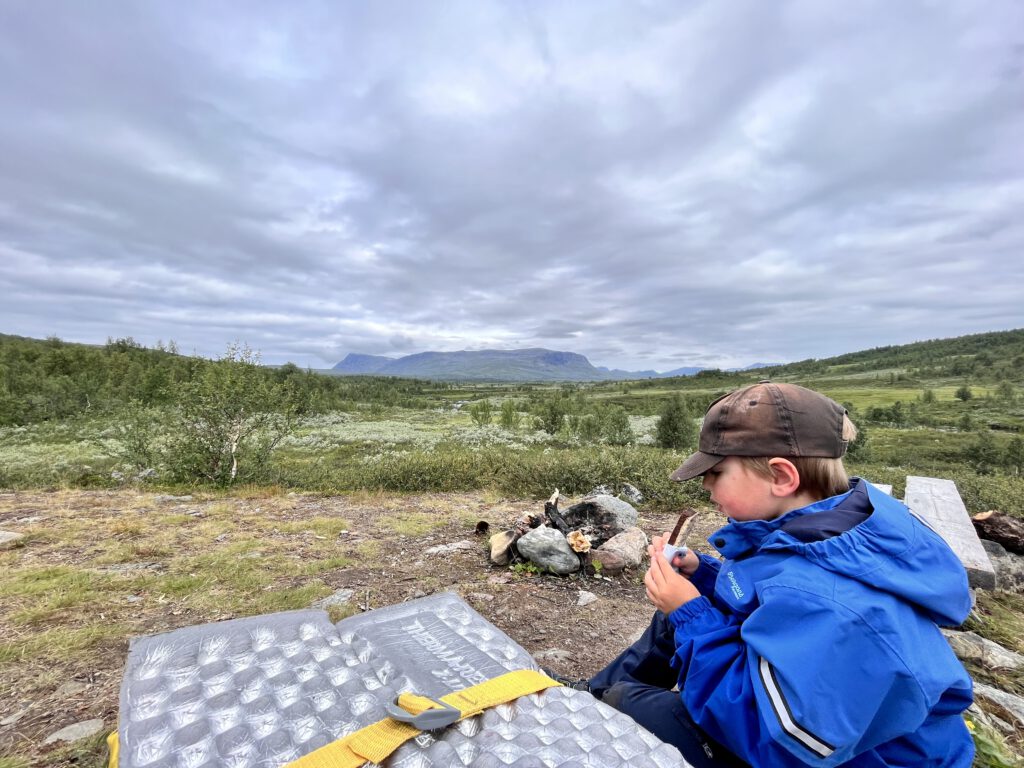
    They set off from the Kungsleden hiking car park in a northwesterly direction. Joël was in a great mood and sang happily to himself the whole time. Of course, they took regular snack breaks because, unlike me, who never consumes the recommended amount of calories on hikes, Joël wanted to eat all the time. But that’s understandable, after all he set a pretty good pace. They went over the Näsberget, past the Näsbergstjärn to the first stage destination, the Mittibergtjärn, about 7 km from the starting point. Raffi and Joël set up the tent a little above the lake before cooking a delicious dinner and making themselves comfortable in their sleeping bags.

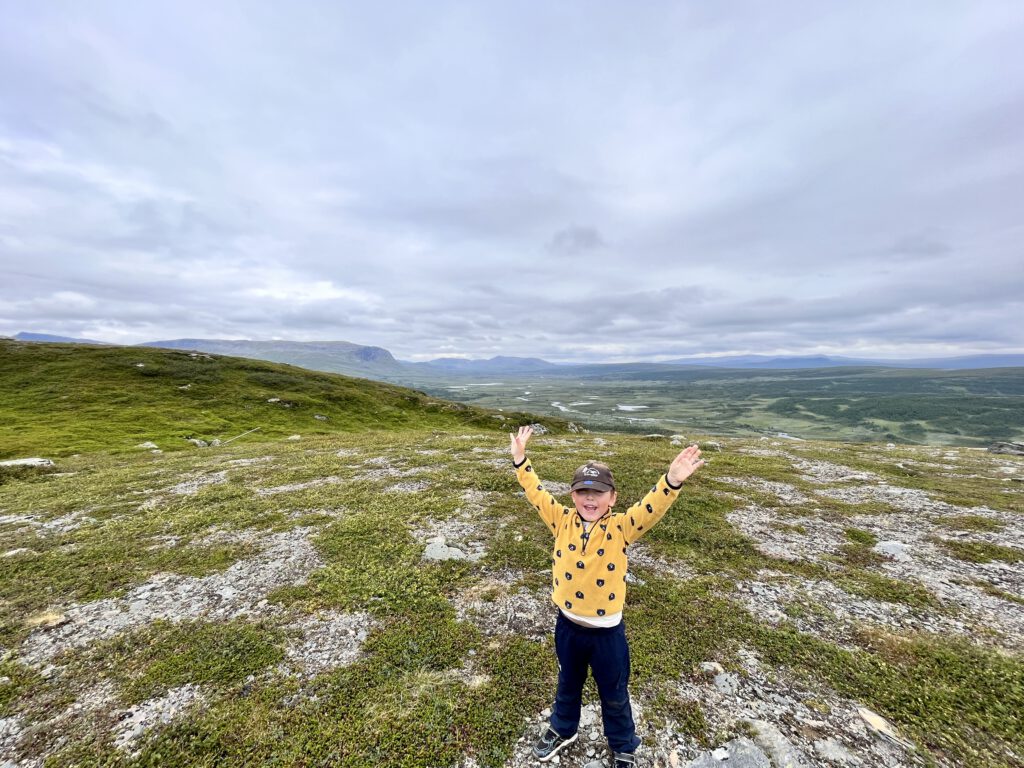
    The next morning started with a hearty breakfast, of course, before continuing on the steep climb up Vállienjuoná. Joël was highly motivated and didn’t need to be pushed at all. The weather was also in their favor, with great light and not too warm. Once at the top, Joël proudly posed for a photo. After the obligatory snack break, they continued across the plateau. Soon after, the descent towards Stor-Tjulträsket began, which was extremely rocky and sometimes difficult to walk on. Almost all the hikers they met asked in amazement whether Raffi and Joël were really coming down from there and how old Joël actually was. Meanwhile, Joël continued walking, unimpressed 😃 Actually, it was about time to look for the next place to sleep, but the two were so in their element that they just kept walking. Of course, there were the obligatory lunch and snack breaks again, but they weren’t yet ready for a place to sleep. So it happened that they were soon only 2km from the car park… and then instead of looking for a bigger space in the dense forest, they actually walked to the car, a whole 15km day’s walk 😬 Of course, this is not the standard that should generally be applied to hiking with children, on the contrary, even more than with adults, you have to take children’s individual abilities into account, paying particular attention to making sure that they eat and drink properly, are dressed correctly, are not too sweaty and do not walk with wet feet. If you take all of this into account, even strenuous hikes can be really fun and the children will definitely sleep well afterwards 😉

  • 16.07.2024

    A Newsletter from Lappland Nature Dreams?!

    Another newsletter?

    Yes, I asked myself that too when the idea came up.

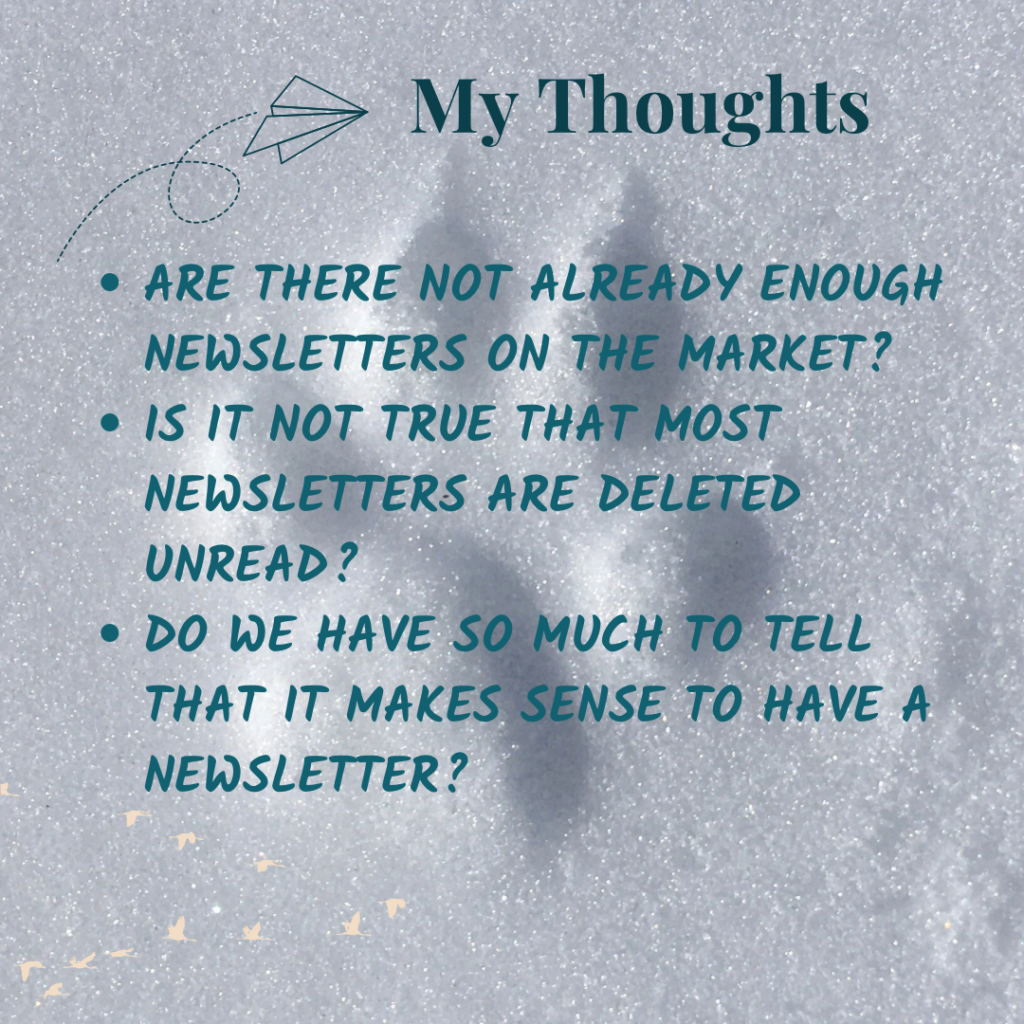
    • Aren’t there enough of them already?
    • And don’t you usually delete them unread anyway, even if you originally subscribed to them?
    • And is there actually enough to report that makes it worth publishing a newsletter?

    Oh well…

    • There are certainly enough newsletters, but at least I can convince myself that many of our former guests are interested in what is going on with us and especially with the dogs. And those who haven’t been there yet will only get it if they have actively decided to do so, so there must be some interest 😅
    • The next question is probably very type dependent. Personally, I go crazy when I have unread emails in my inbox – they then circle around in my head like unfinished tasks. Therefore, important emails are read immediately and usually answered or processed very quickly because they are then moved from the inbox to the relevant folder. So what happens to newsletters when I don’t have the time or nerve to read them? They will be deleted unread, yes. But I actually always take the time to think briefly about whether I really delete newsletters from the respective sender every time, because then I would rather accept one more possible click to unsubscribe instead of repeating it every few days or weeks having to delete an email. But there are also newsletters that I (almost) always read, even if it’s just a quick scan to see if there’s anything relevant/interesting in them, then they go into a special folder. In this respect, a well-written newsletter might have a chance of being read by the right recipient 🤔
    • The last question can actually be answered very easily or not at all. Of course, something always happens, after all, the world continues to turn every day – and if not, THAT would definitely be worth a newsletter 😂 but seriously, if you don’t have the ambition to report new things weekly or even daily, but rather monthly or quarterly, then there will certainly always be enough “news” or “topics” to fill a newsletter. When it comes to blogging, it always seems strange to me to write something that is no longer completely new but that I haven’t found the time for yet, because that goes a bit against the character of a blog. Because of the different format and planned publication of a newsletter, it would be ok, right?

    And what should be in the newsletter? You as potential readers should actually answer that… the ideas range from the introduction of one or more dogs and their individual personalities, to news about the kennel, the introduction of new tours or tour reports from past tours – perhaps from the perspective of a guest, general information, tips and tricks about living with dogs to thoughts and ideas about sustainable and responsible tourism – to protect our environment and our animals. I think there’s no shortage of ideas… just when you take on too much, there’s a lack of time to implement it 🙈 So, what’s important to you? What interests you the most? What’s definitely stopping you from hitting the delete button right away? 🗑️ Feel free to comment on Facebook or Instagram or write us an email.

    So only one last question remains: should there be a newsletter, yes or no?

  • 23.06.2024

    Midsummer in Sweden

    One of Sweden’s most important holidays is Midsummer, the longest day of the year, the summer solstice 💐☀️🌸

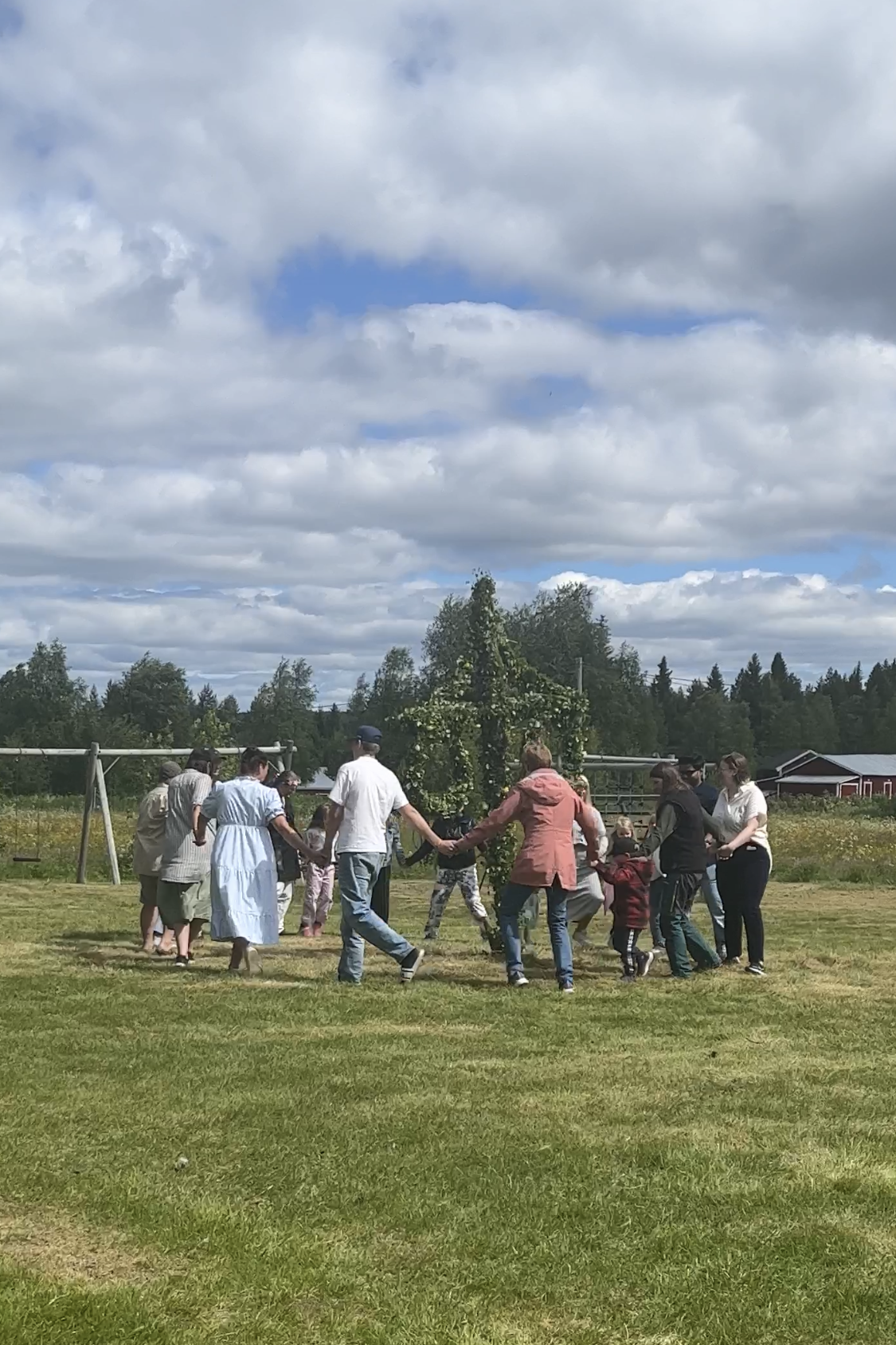
    Many tourists want to experience midsummer in Sweden and are disappointed that there are not lavish parties everywhere – apart from exceptions in large cities and tourist hotspots. Many Swedes traditionally celebrate midsummer with their families, often in their „stuga“ – most Swedes still have a summer house somewhere where they spend such occasions as well as their four-week summer vacation. Of course there are also midsummer celebrations, including here in Moräng. But it’s not about making the biggest fuss possible, it’s much more about meeting up for fika – for example, coffee and cake, chatting and finally dancing together around the midsummer pole that has previously been decorated with birch twigs and flowers. The most well-known song what the sing while dancing is „små grodorna“ and is about little frogs 🐸 just google it, it’s really funny…

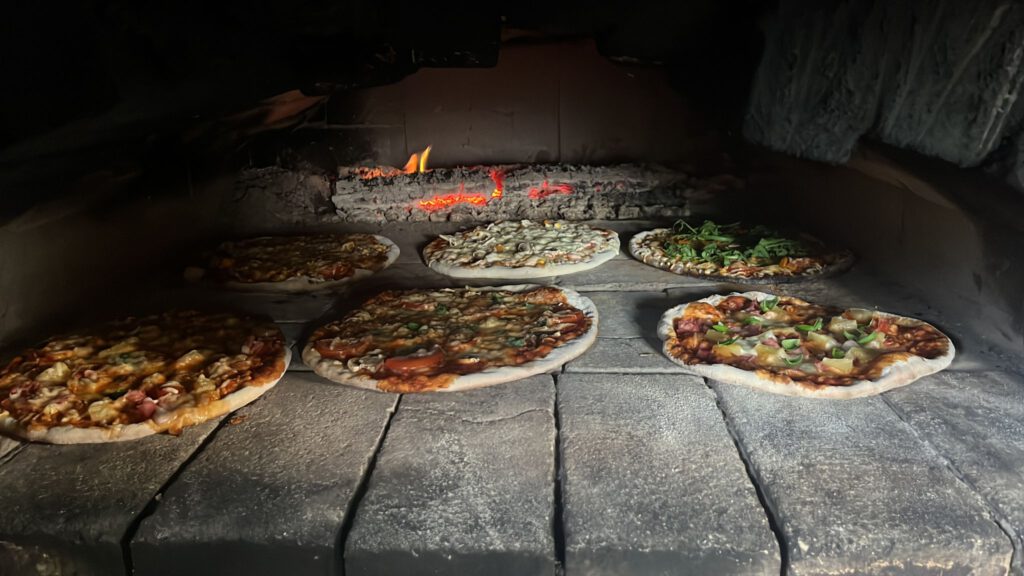
    Our Midsummer weekend began on Thursday evening with delicious pizza from the stone oven 🍕

    Friday is Midsommarafton, the evening before midsummer. On this day, traditionally a midsummer festival takes place in Moräng. Everything in a small, cozy setting, but of course also with delicious fika and the traditional dance 💃 

    In the evening we visited friends for a small birthday party combined with a cozy barbecue evening by the lake.

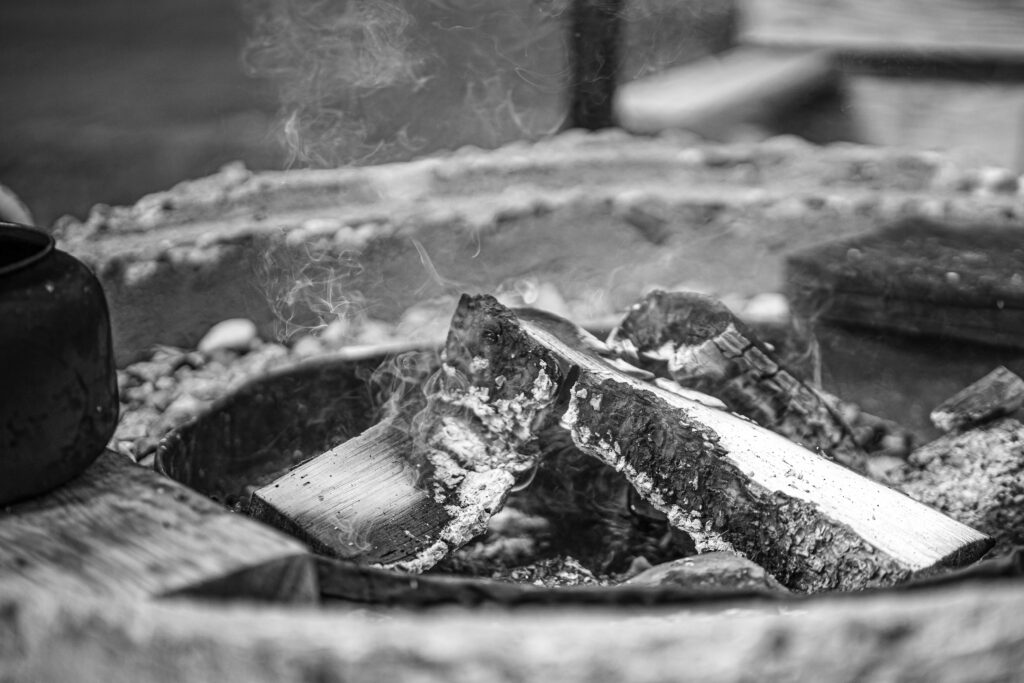
    On Saturday, a spontaneous return visit took place, as some guests at the party wanted to see our dogs 🐕 and by the way, we were sitting comfortably by the fire again, because they hadn’t tasted Swedish coffee boiled over open fire yet ☕️

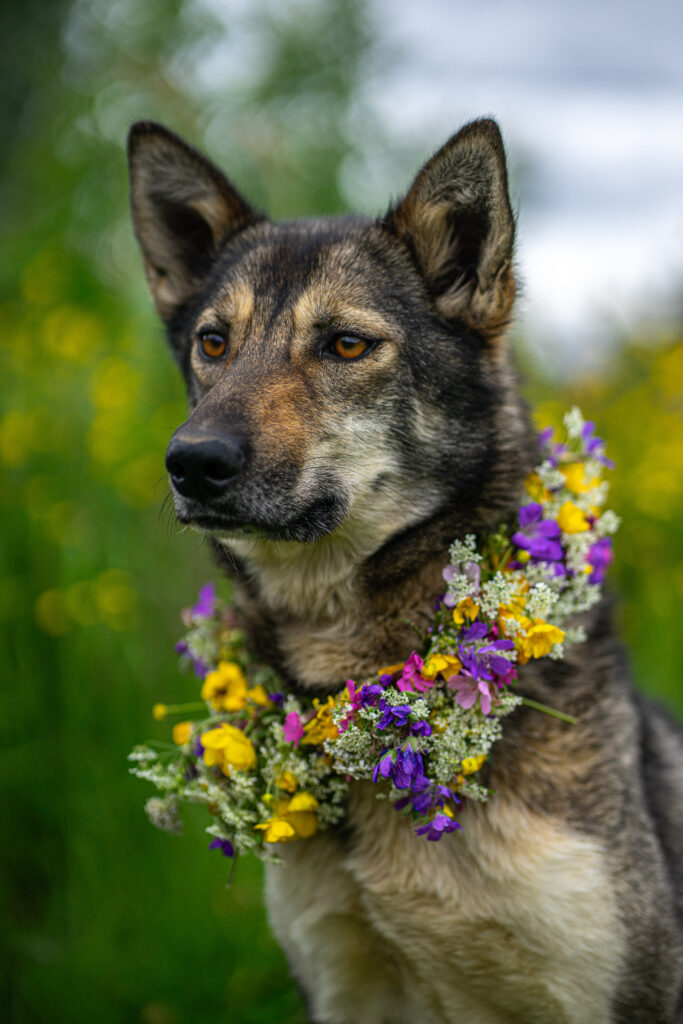
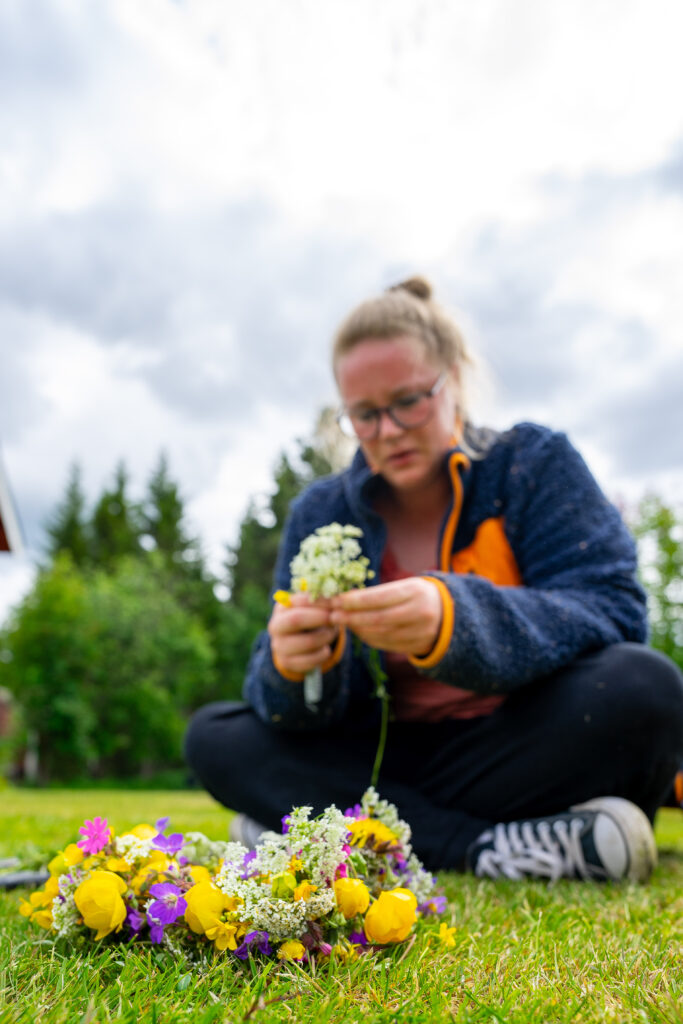
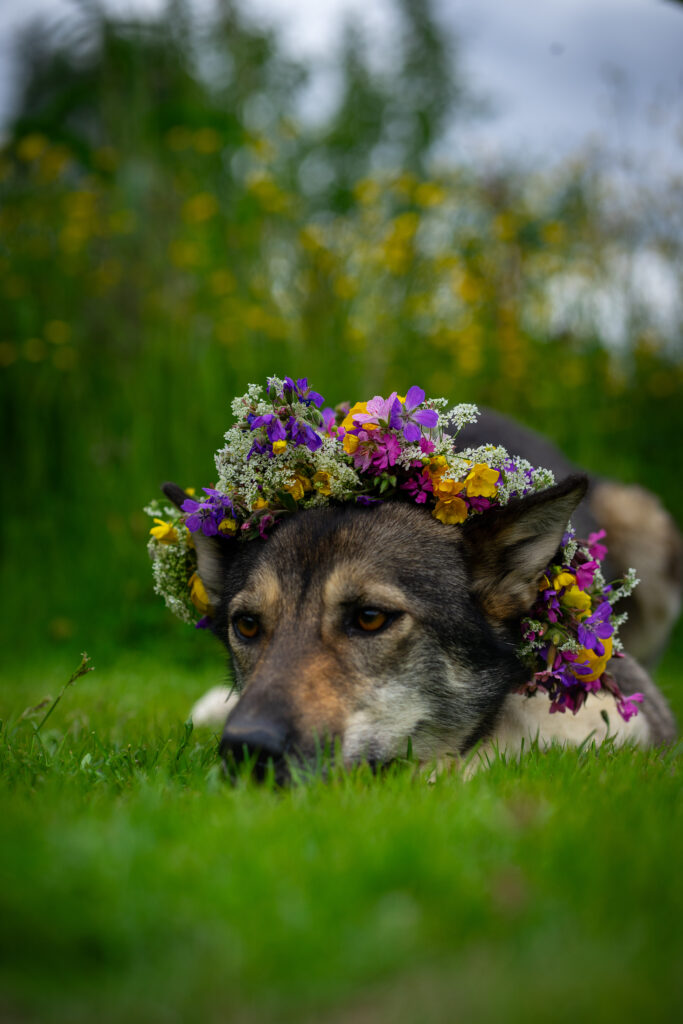
    Meanwhile, Michelle made a flower wreath for Maya, who then had to serve as a midsummer photo model. Well, with a few treats, she didn’t think it was too bad 😂

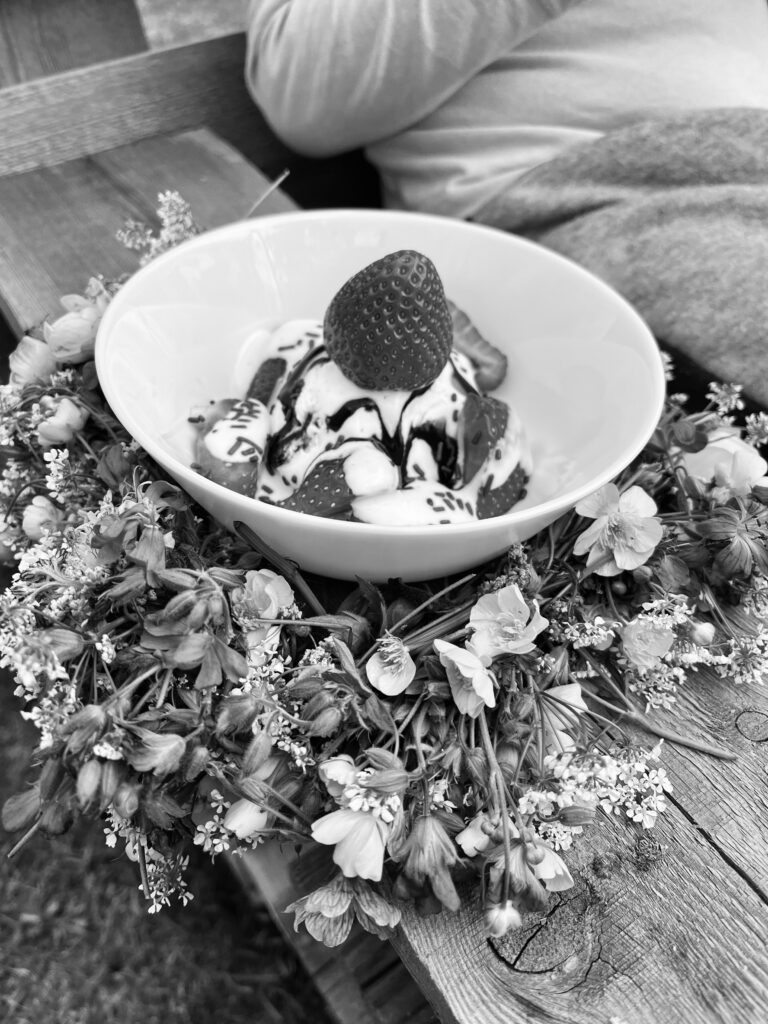
    And what else belongs to midsummer? Vanilla ice cream and strawberries, of course.

    Afterwards, Michelle and I went on a short trekking tour with Tornado and Zazu to the Glommersberget with a view over Glommersträsk to Vithatten. However, it was difficult to stop because both we and the dogs were immediately surrounded by countless mosquitoes, knots and horseflies. Anyway, the view was still beautiful 🤩 

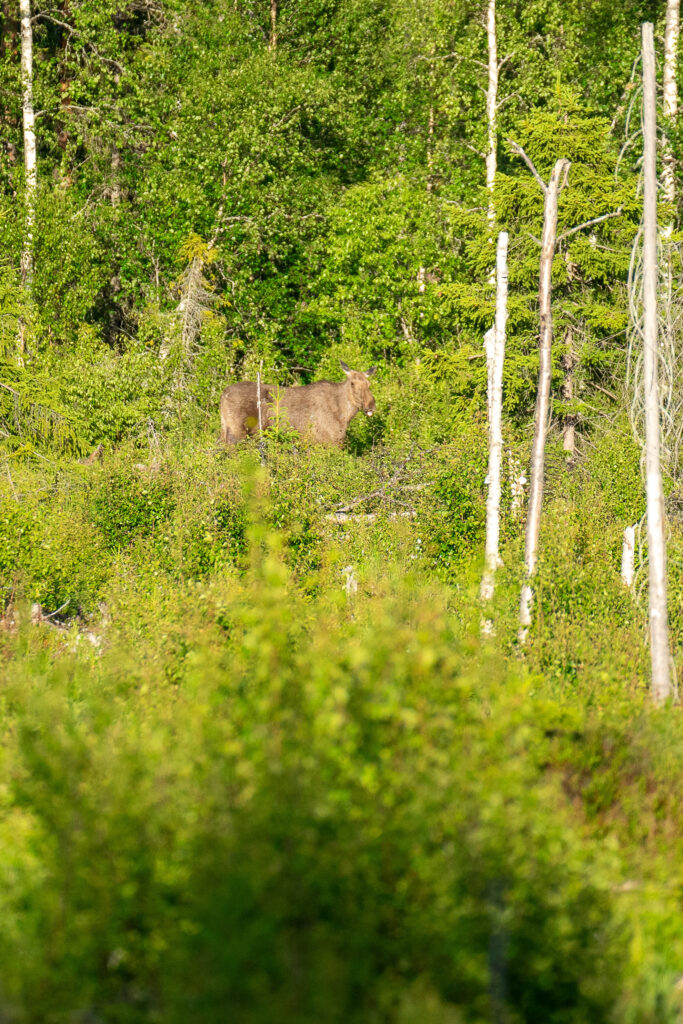
    In the evening we went on a moose safari and thanks to Raffi’s eagle eyes we actually saw a moose cow. In the picture it even looks like she is sticking her tongue out at us. 😉

    All in all a very nice, relaxing weekend. 

  • 16.06.2024

    Summer in Lapland

    Midsummer is almost here, so it’s time for an update… the traditional end-of-season post was cancelled this year for family reasons, but that doesn’t mean that we aren’t once again very grateful to our guests and partners, and above all to our wonderful dogs, for a great winter season.

    And after that?

    In May, Joël and I spent two weeks in Germany visiting family. It was the first time in over four years, and for Joël, the first time he had ever consciously been in Germany. He coped perfectly with the trip and the many people, but after a week at the latest, homesickness set in. For me, it got to the point where whenever I was in the house – especially in bed at night – and heard a dog barking, I jumped up and thought I had to go out and see what the dogs were doing, even if I could clearly hear that it couldn’t be one of our dogs barking 🤔🙈

    As soon as we got home, things got fun again, because our girls (except for two) had waited until exactly that time to come into heat. But then one came every day or every other day, so we had to think of new kennel combinations every day. Well, now, apart from Blixten, who is in heat for the first time and is therefore a little unsure, all of them are through or at least past the peak, so everything is a little more relaxed again 😊

    Rafiki is still the dog we fear most for. At first his knee had developed well after the TPLO (cruciate ligament surgery), but since the end of April you could clearly see and feel instability in the knee. When I first visited Töre about this, they put it down to the fact that the healing process was simply taking longer. At my further insistence and with the support of our local vets from Skogsveterinärerna Arvidsjaur, the knee was examined more closely during a further visit and a meniscus injury was considered. On the one hand, this is not what you want to hear, but on the other hand, it is more in line with our feelings and the results of all the tests at Skogsvet. Nevertheless, Töre wants to wait another two months before having a surgery, so until then we are trying to help him with physiotherapy and hope that a surgery will not be necessary. But realistically, he probably won’t be able to walk in front of the sled next winter either 😔 so if any of you are a dog physiotherapist and don’t have anything planned for the summer… come along. And if a vet is reading this, Skogsveterinärerna is looking for another vet for the team, please get in touch if you’re interested 😉

    What else does summer have to offer? This year there was definitely an unusually high number of adders 🐍 – potentially fatal for dogs. Shortly after we returned from Germany, we had four of them right next to the dog kennels within a week. A small, very aggressive one was even sitting in Barolo and Tornado’s kennel. I was in the house when the dogs started barking „strangely“. Usually you can tell very well what barking means. In this case I couldn’t and ran out as quickly as possible. When I stood so that I could see all the dogs, I couldn’t tell at first. They were all calm (clear in retrospect, because I was there after they alerted me), no sign of a fight, moose or other wild animals around or anything like that. I was just about to go back to put on proper shoes when I noticed that Tornado was staring at something and Barolo had hidden himself in the hut. When I got closer to their kennel, I saw the snake sitting aggressively upright between the door and the food bowl. At first I wanted to let Barolo and Tornado out to get them to safety, but since the snake was sitting so close to the door and looked like it was about to attack, I didn’t want to take the risk of it attacking them as they pass by… or slithering into one of the neighbor kennels. On the other hand, it was impossible to go into the kennel alone to get the snake out without the dogs coming closer. So I quickly called Raffi, who was at the neighbor’s at the time, to help me. I then went to the back of the kennel to distract the dogs while Raffi was able to take care of the uninvited visitor at the front. Afterwards I spoke to Patrick from the reptile rescue center in Polch to see if there was anything that could keep the snakes away. But apart from a waist-high smooth wall with no corners, nothing is really safe. Nevertheless, we are currently trying a snake deterrent, a device that is stuck into the ground and vibrates and makes sounds. The sounds actually scared me off. Because when I was cleaning the dogs after Raffi had installed the part, I suddenly heard a „rattlesnake“. I was a bit confused until I realized that it was this thing, because there really shouldn’t be any rattlesnakes here 😂 Since then, we haven’t had a snake near the kennels, but that’s not very significant, because it was much colder and rainier afterwards. And today I almost tripped over one with Barolo and Joël, right on our training route. At the last second, I was able to pull Barolo and Joël in the other direction and the snake scurried away into the bushes. As far as I’m concerned, it can snow again, I’m sick of reptiles 😏

    But summer isn’t all bad… apart from the fact that there will soon be delicious berries to pick again, it also offers the opportunity for shorter and longer husky trekking and photo tours, as well as training for the next season. So if you don’t have any plans yet or are in the area anyway, feel free to browse the homepage to see what suits you best.

  • 01.02.2024

    Ethics and Responsibility

    Today it is a serious topic without beautiful pictures of happy dogs in the snow and sunshine, northern lights or what Lapland makes so special.

    Because unfortunately Lapland – or more precisely the sled dog scene – also has dark sides. Many tourists who have always wanted to do a sled dog tour and especially those who have only recently had it on their bucket list since it has been „in“ are not aware of all the pain connected with this business. Therefore, a little bit of clarification should take place today to create awareness and perhaps give one or the other sled dog a better life.

    How do I get on it now? Two occasions are currently very present. On the one hand, Länsstyrelsen, the authority which is responsible for the controls of the sled dog kennels, has confiscated several dozen dogs in recent months due to violation of animal welfare regulations. Not for the first time, but currently it is growing again and affects well over 100 dogs. Who should all of them adopt? I don’t know it. On the other hand, our Rafiki is just undergoing a surgery because of a cruciate ligament fracture, where the veterinarian’s clear statement was that most owners rather take the decision to put the dog to sleep than to pay an expensive surgery with an uncertain outcome.

    But now one step at a time. In contrast to Finland and Norway, Sweden has a very strict animal welfare law.

    First, in Sweden it is prohibited to keep dogs on a chain. You can think this is positive or negative. In Norway, we ourselves got to know a perfect example of chain keeping, which in my opinion showed no disadvantages with regard to movement or social contacts and also has other advantages. However, we also got to know the opposite, too short chains (which were quickly extended before an announced kennel check, which was only possible because two thirds of the dogs were on tour) and no free run at all. Since the concrete design of chain keeping is often not sufficiently checked (can be?) and many kennels in the area of ​​mass tourism only look at profit, a ban on chain posture seems quite positive.

    The regulations in Sweden are also very extensive in terms of kennel design. The kennel (in this sense not the complete kennel but the kennel where 2 or more dogs live) must be relatively large, there must be isolated dog huts with straw, wood chips or a similar surface or a dog stable, the dogs must have permanent access to fresh water in summer, they have to get free run daily, etc. Even if you might argue about some details of the regulations the approaches in the sense of animal welfare are definitely positive. Furthermore, there is a duty in Sweden to register every dog ​​with the Jordbruksverket and also apply for a permit for the kennel if you have more than ten adult dogs or are working with dogs (one is enough). But here we also come to a fundamental problem. I know very few musher beside us, that have registered their dogs, so that it is probably not known how many sled dogs there are at all. However, it is even worse that very many – unfortunately also many immigrated mushers – do not register their kennel, which is why it is of course difficult for Länsstyrelsen to control them if they are not even known. Now you could object, if nobody complains, there is probably nothing to complain about. But isn’t that too easy? Does every neighbor know what exactly the regulations look like? And why shouldn’t everyone have to stick to the regulations?

    There is a similar problem with the big kennels that do not have so many dogs themselves and only take up mushers with their own dogs for the season, often of course with too little space for all dogs and avoiding the responsibility, to care for the dogs that make money in winter even in summer.

    It gets even worse when you know that there are kennels in Scandinavia that “produce” puppies specifically for the winter so that their guests have something to cuddle with and take great Instagram photos. Not only is it better to have puppies in spring/summer, the worst thing is that these “photo puppies” are sometimes not even raised any further. There are cases where they are simply „eliminated“ after the season.

    This doesn’t just happen to puppies, but especially to old and sick dogs or those who perhaps don’t work as hard or are no longer wanted for whatever reason. Unfortunately, in all three countries it is legal to euthanize or shoot dogs that you no longer want without medical reasons, as long as the dog is not tortured during the killing. Can you imagine that? As long as the dog is cute enough to take photos or pulls the sleigh on which paying tourists sit/stand, they are allowed to live, but when they only cost money, they get rid of them! What kind of world do we live in? Is business really more important than life?

    Of course, we have often heard that sled dog tours are so expensive. Yes, they are not cheap. And I also come from an environment where many may never be able to afford such a vacation. It’s a shame, for those who are really interested in it. Nevertheless, you have to be aware of how many weeks a year a sled dog earns money and how many months a year it costs more or less only money, be it food, water, the equipment of the kennel, veterinarian, electricity, etc. Don’t forget one to one and a half years until the sweet puppy starts working and the years as a pensionist, which can be five years. Roughly speaking, a dog may earn money a quarter of the year in two thirds of his life, it costs the rest of the time. But does that justify us to make it an object of a „cheap holiday“? Definitely not! Our dogs are our family and they shall get whatever it needs. We would like our guests to participate in this life with our dogs. Yes, that costs. And we understand everyone who cannot afford it. It is also completely ok for us if someone goes „to the competitors“, because we don’t have this competitive thinking. But we just want to ask everyone who wants to do a sled dog tour – regardless of whether a few hours or several days – have a look at where you book, ask questions, about everything! Think about: Ten „Flagship Oldies“ cannot be right if you have 300 running dogs, unless there is a plausible and practicable re-homing program. Even if you book through tour operators – which is totally fine – insist on more information. Because unfortunately not all tour operators think and ask enough themselves neither.

    And now we let’s talk about Rafiki. This crazy sweet dog was actually scheduled to run at the Metsjövidda Fjällrace. Unfortunately he was injured at Christmas. Fortunately, not on tour with guests, so neither a guest has to blame him/herself, nor do we have to ask ourselves whether it is really good to let guests drive dogs. No, it’s banal, he simply jumped down from the hut – like he did 100 times every day. And probably landed badly. At first we thought it would go away after a few days, because apart from a slight limp on the first day, he immediately went back to running and jumping like a madman and showed no pain whatsoever when we examined him. However, when he was standing, you could see that he wasn’t putting his foot down properly. When things didn’t get better after a week, we went to the vet and the test was done under anesthesia: the cruciate ligament was broken and needed surgery. Not many vets carry out this surgery, but there is a specialist who is “only” 200km away from us. Well, we’re in Lapland, so it’s not that far. We then went there for a preliminary examination in the second week of January. The vet explained to me how the operation would go and that there was no guarantee for working (sled) dogs that they would be able to work again. Many dog ​​owners (especially from hunting dogs) therefore prefer to have their dogs euthanized rather than spend almost SEK 50,000 on a surgery with an uncertain prognosis. That’s just the way it is in Sweden. Hello? So we’re back on topic. Rafiki is three years old, an absolute “happy dog” and he should be put down because he now costs money and maybe doesn’t earn any more? Yes, of course these costs, which don’t even include rehabilitation, tear a big hole in our budget. But we know that after such an operation a dog can walk and run normally and is not in pain. It must not matter at all whether he pulls a sleigh again later or not. We didn’t doubt for a second that Rafiki would get the surgery and of course we hope that he recovers well because he’s already going crazy when the others go on tour and he can’t come with them. And if not? Then he’ll just become a cuddle dog! Apart from the fact that he is also a perfect photo model 😉 At this point we would also like to take the opportunity to thank some of our dear guests who supported us with a contribution to Rafiki’s operation, THANK YOU 🙏

    And finally: every musher is responsible for his dogs, but if tourists also question more critically how the dogs live, at some point it may no longer be possible to offer mass tourism at the expense of the dogs. I wish so and I know that we have fellow mushers who feel the same way and guests who support us. But we’re not there yet. Therefore: don’t look away! Ask questions! Act!